Ruminating on Roy Harper – extract

Ruminating on Roy Harper – extract

Out in hippie-ville we had Hendrix, Cream, Doors, Country Joe & the Fish, Captain Beefheart, Love, Buffalo Springfield, Traffic and Edgar Broughton to keep us going. There were all-night gigs and free festivals. It was buzzing. The venues were cheap and packed and the vibe was positive.

There was ‘2001 a Space Odyssey’ and ‘Easy Rider’ at the cinema. We went to the Electric Cinema and saw Eisenstein’s ‘Battleship Potemkin’ and a number of French movies. Liz was in to culture and introduced me to a wide range of literature and films. She took me off to see ‘Ulysses’ and I thought I was going to watch some Greek epic! That’s how uncultured I was. But I was open to anything and my mind was a sponge.

In my free time I’d browse round the 2nd hand record stores, flicking through the stacks of albums looking for West Coast Acid, British Psychedelic or Blues, Chicago Blues, Country Blues or old Folkways albums with the cardboard sleeves. You’d strike up conversations with fellow freaks concerning bands, artists and must-haves. I still do it occasionally but the vibe is not the same, the albums are no longer a £1 and everything is either overpriced or crap. Even the car boot sales and charity shops fail to throw up anything interesting – or perhaps that’s because I have so much it’s hard to plug the gaps?

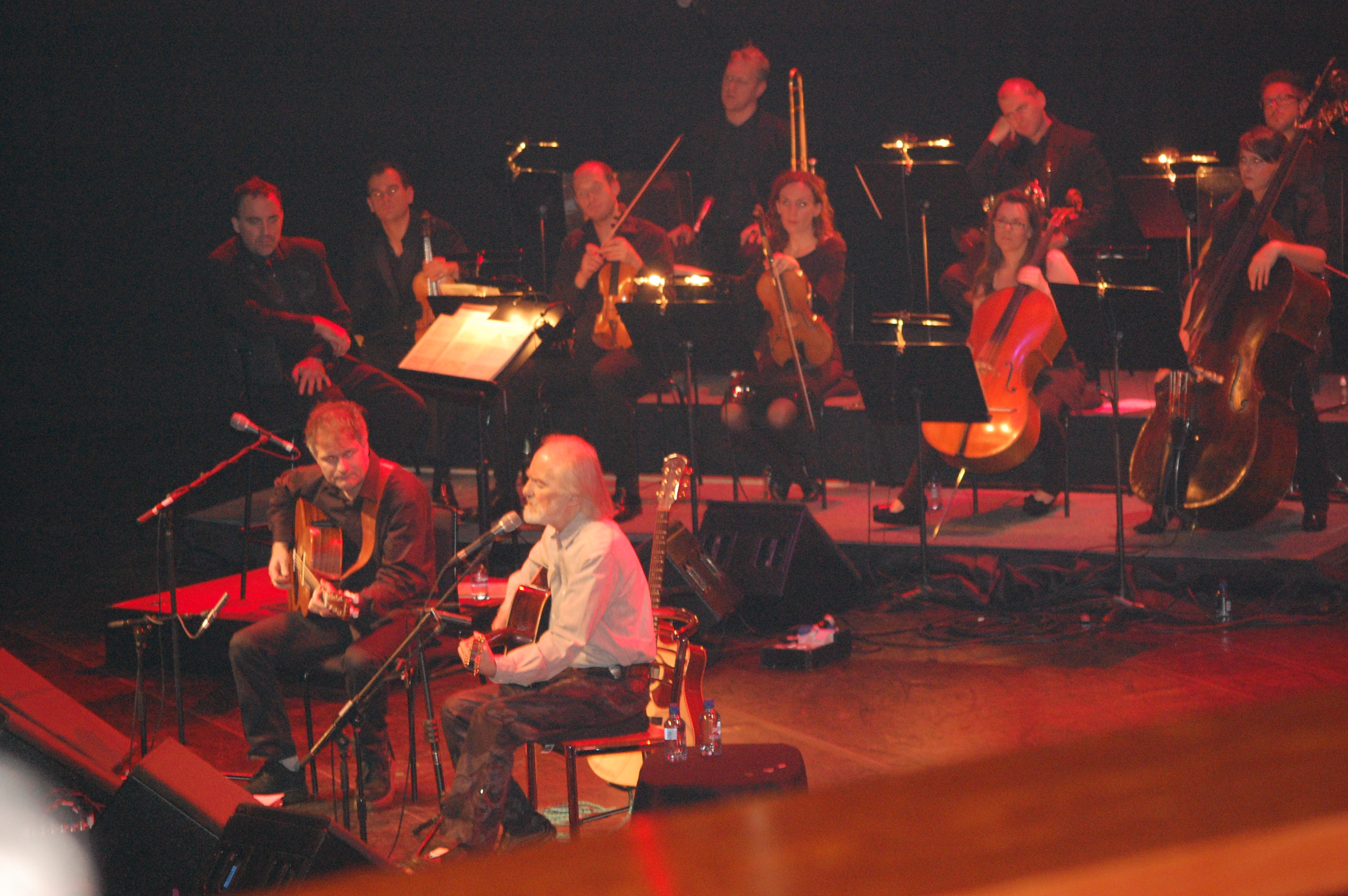
Roy Harper – Royal Festival Hall 2011 – A few Photos of Roy and Nick

Roy Harper – Royal Festival Hall 2011 – A few Photos of Roy and Nick

It is always good to see Roy and Nick play together. Nick complements Roy so perfectly. It was brilliant seeing them together on stage at the Royal Festival Hall. A magical gig.

The night before I had see Nick play in a packed concert and he was on fire. Absolutely superb.

I’m looking forward to seeing his again this autumn. It will be brilliant to see him playing live again after all the mess of the last few years!

Here’s a few photos I took at that gig.

DSC_0025DSC_1043 DSC_1025

Poetry – Roy

Poetry – Roy

I’ll let you guess who this is about.

Roy

Household dissenter,

Absconder and antagonist;

Army runaway

And asylum breakouter;

Prison inmate,

Jazz marathon poet

And convention flouter.


Travelling busker,

Songwriter;

Dauber on the city walls.

Gig talker,

Hitch-hiker,

Singer with the biggest balls.


Awkward and acerbic,

Sweet and melodic,

Laughing madly in the gale.

A stormcock,

A harper,

Creator of the epic rail.


Opher 21.6.2016

Quote Number 2 – Roy Harper – I Hate the Whiteman

Quote Number 2 – Roy Harper – I Hate the Whiteman

IMG_2128

My second quote is from Roy Harper – from the poem/song I hate the whiteman.

It is not a song about racism or against white people per se. It is not about colour at all. It is about the mentality of European culture that has swept over the world and is presently swamping nature and all other cultures.

It is a poem rejecting the greed and power seeking and violence of western culture. Its alcohol, nuclear bombs and environmental destruction in the name of progress.

It is a poem that rejects those values in favour of a life-style that is in harmony with the planet.

It is focussed on the life-style of the North American Indians who suffered genocide from the European invaders.

‘Far across the ocean
In the land of look and see
There once was a time
For you and me

Where the winds blow sweetly
And the easy seas flow still
And where the barefoot dream of life
Can laugh and cry it’s fill

Where slot machine confusion
And the plastic universe
Are objects of amusement
In the fiction of their curse

And where the crazy whiteman
And his teargas happiness
Lies dead and long since buried
By his own fantastic mess

For I hate the whiteman
And his plastic excuse
For I hate the whiteman
And the man who turned him loose…’

It’s a long quote but one of my favourites. Roy was, and is, one angry mother. He thought there was a better way to live – so do I.

If you would like to try one of my books they are all available on Amazon.

In Britain :

http://www.amazon.co.uk/Opher-Goodwin/e/B00MSHUX6Y/ref=sr_tc_2_0?qid=1461306850&sr=1-2-ent

In America:

http://www.amazon.com/s/ref=nb_sb_noss?url=search-alias%3Dstripbooks&field-keywords=opher+goodwin

In all other countries around the world check out your regional Amazon site and Opher Goodwin books.

Sabotage and Integrity – Roy Harper

Sabotage and Integrity.


One thing always stands out to me, concerning Roy Harper and integrity, and that is the number of times he has deliberately sabotaged his career. It is almost as if he really does not want to be successful.

The reality is that he does want to be successful but he refuses to compromise, puts his music and poetry first and goes out of his way not to court success. I know of no other person who has so actively resisted or so deliberately stood strong against the establishment, defying all temptation. He has to do it his way or not at all.

Roy has a consistent philosophy that has permeated everything he has done; it is one of being opposed to the whole ethos of Western civilisation. He sees it as being destructive, violent, restrictive and controlling. His impossible dream has always been for he, and the woman he loves, to be free to live in a natural way, interacting with nature.

He would have been content being a North American Plains Indian, free to ride the wide open spaces, with no rules.

He identifies with the rebellious spirit of the Beat generation of the fifties. Corporate life is an anathema. To sell his art is, in many ways, wrong. Yet he has to live and that requires money. He is in Showbiz and is part of the entertainment industry. It is a dilemma that has torn him apart on many occasions.

Right back at the start, on his second album, he proclaimed (in Circle and Come out Fighting Ghenghis Smith) :-

‘well if that’s what success means you can stuff it
I don’t wanna know, and the money and the trappings you can throw in the sea’
and ‘But I don’t need wealth and I don’t want fame’

He lambasted for his statements – because, as everybody knows, wealth and fame is what Showbiz is all about and it was recognised that Roy did want to be successful. What they did not understand was that he wanted to be successful for the right reasons, on his terms. He wanted something better and more meaningful than wealth and fame.

In the sixties the Underground was ostensibly not about making money but rather sharing and community. It was built around a different principle to that of capitalism and greed, and that was something Roy identified with.

Both CBS and Liberty recognised Roy as a potential star so they engaged Shel Talmy to produce him. It was a poor match. Shel had established his credentials by producing chart friendly hits for the likes of the Kinks and Who. Roy was not into producing two and a half minute, radio-friendly songs. He was busy writing poetic epics like McGoohan’s Blues. The marriage did not work. Roy refused to play the game.

By the late sixties, early seventies Roy was on the cusp of breaking through into the big time. He had been signed to the prestigious Harvest label. They thought they could harness his Underground credibility and musical talent to sell vast numbers of records. Roy just wanted to record his music as well as he could.

At this time Roy was getting lots of radio play. He was being offered Peel Sessions and In Concert sessions. He was let loose on radio for live hour slots and being lauded by the likes of John Peel and Jimmy Page. So what did Roy do? He stopped playing halfway through a BBC live broadcast to lambast the BBC by saying that he was now surrounded by everything he stood against. It was not exactly the best career move or one that was likely to endear him to producers. For some reason the live shows dried up.

EMI wanted a single to promote Flat Baroque and Berserk. All they needed was a short, catchy single that they could put out on radio. They wanted a hit to promote the album. The very idea seemed to antagonise Roy. It smacked of sell-out. So Roy wrote and recorded a single that he knew could never be put out and was definitely not radio friendly (except to his loyal following). It was called Hell’s Angels. Management were not amused.

In the early seventies Roy was a major draw on the live scene and his concerts and albums were receiving much attention with interviews and reviews in all the major music press – such as Melody Maker and NME. It looked like it was just a matter of time until he was propelled into the top strata. But there were two major criticisms: firstly he was portrayed as a stoner due to his open use of cannabis (and thus could be trivialised) and secondly he was criticised for highlighting social issues but not providing any panaceas for the world’s problems. The lack of depth and understanding from the critics incensed Roy. His angst was to later manifest itself in a song.

Following a good showing for Flat Baroque and Berserk, Harvest was confident that the next album would be the big one. They provided all the studio time and support, including keeping Pete Jenner, a sympathetic producer. All they required was a great album with a catchy single.

Well they got a great album but it only had four songs, none of which were short enough to even consider as a single. On top of that one of them – ‘Hors D-Oeuvres’ – was an open attack on the critics. These were the music press, the people who could make or break careers. Never had there been such a vitriolic put-down.

In live performance Roy would actually point them out – ‘there they are, at the bar, not listening’. He treated them with utter disdain.

I do not think that it elicited more generous reviews or assisted in record sales – quite the opposite.

Then came the ultimate in opportunities. Roy, against strong opposition from the likes of Paul Jones, landed a lead role in the 1972 film Made featuring the then extremely popular Carol White. It was a film of social realism. Roy had to play a Pop/Rock star.

It provided him with the ideal vehicle for stardom. All he had to do was write a soundtrack. He had carte blanche.

Lifemask was the album that came out from it. It was based around a poem/song that was a twenty plus minute epic – probably his best song but hardly accessible to the average punter. Once again the album offered no obvious hit single. The soundtrack never really got off the ground. It looked as if Roy’s heart wasn’t in it. Not really what EMI were after.

Valentine saw arguments with TV producers over the backdrop of a heart. Roy wanted control. The album itself seemed to present a number of songs deliberately written to be controversial or infuriate various groups.

For an outsider, such as myself, looking in, it appeared that Roy was not willing to compromise in any way, was resolute about his integrity, obsessive about the purity of his music, and determined to reinforce his rebellious stand against the juggernaut of society he constantly fought against.

I could go on.

He sabotaged himself at every turn.

You have to admire him for it. I’m so glad he did. I think success might have robbed us of so many brilliant songs. If he had been cautious or pandered to an audience he would have diluted his songs like so many do these days, but Roy was never shy of causing offense. I can’t imagine Roy being restricted in any way. He is the epitome of anarchic freedom.

But one is always left wondering – what if……….??

My influences – in Music – Cerebral lyrics that mean something!

My influences – Music – Cerebrally

My influences – Music


Music has had the biggest impact on my life of anything. I have been transported by it, emotionally excited and cerebrally engaged.


Cerebrally
Roy Harper I was fortunate enough to catch Roy when I was a mere slip of a lad and he was just starting out. I was at those gigs where epic songs such as McGoohan’s Blues and I Hate the Whiteman were new. I witnessed the passion and fury of a young Roy as he railed against the society we were imprisoned it and what it was doing to us and the world.He seemed to mirror my own views and I spent hundreds of hours listening to Roy live, talking and explaining and in song and poem, and on record. What he was talking about resonated with me and caused me to think more deeply about what I was doing with my life. Roy fed my rebellious streak and made me take a long hard look at the society I was growing up in and its values.
Bob Dylan Back in the sixties there were two major issues – civil rights and war.Bob Dylan in his early albums created songs that articulated the plight of blacks in the South, the civil rights movement, the assassinations of Martin Luther King, Medgar Evers and the cruel murder of Emmet Till.

He wrote of the futility of war, the threat of nuclear disaster and the stupidity of extreme right wing groups such as the John Birch Society.

He deployed humour and poetry to create a barbed attack on prejudice and Jim Crow and highlighted social injustice.

He awakened my awareness and raised my sensibilities.

Phil Ochs Phil also addressed those same civil rights issues but tended to focus more on the struggles of the working man, the trade unions and people’s rights. His songs were documentaries on politics and social issues.Dylan sneered at him and called him a journalist. Well he wasn’t the poet that Dylan was but he certainly could bring political and social issues alive.

He made me think about exploitation, racism and communism.

Woody Guthrie Woody was where songs about social issues started. He used his guitar to oppose fascism, fight for workers’ rights, equality and a fairer society. He stood up against exploitation in the face of violence.Woody took his philosophy with him where-ever he went – on picket lines, in radio studios, recording studios, and rambling around the country. He befriended and played with black musicians at a time when that was not condoned. Woody fought for what he believed in. His strength, fortitude and uncompromising attitude were an inspiration to me.

Roy Harper – I Hate the Whiteman

Roy Harper – I Hate the Whiteman

IMG_2128

My second quote is from Roy Harper – from the poem/song I hate the whiteman.

It is not a song about racism or against white people per se. It is not about colour at all. It is about the mentality of European culture that has swept over the world and is presently swamping nature and all other cultures.

It is a poem rejecting the greed and power seeking and violence of western culture. Its alcohol, nuclear bombs and environmental destruction in the name of progress.

It is a poem that rejects those values in favour of a life-style that is in harmony with the planet.

It is focussed on the life-style of the North American Indians who suffered genocide from the European invaders.

‘Far across the ocean
In the land of look and see
There once was a time
For you and me

Where the winds blow sweetly
And the easy seas flow still
And where the barefoot dream of life
Can laugh and cry it’s fill

Where slot machine confusion
And the plastic universe
Are objects of amusement
In the fiction of their curse

And where the crazy whiteman
And his teargas happiness
Lies dead and long since buried
By his own fantastic mess

For I hate the whiteman
And his plastic excuse
For I hate the whiteman
And the man who turned him loose…’

It’s a long quote but one of my favourites. Roy was, and is, one angry mother. He thought there was a better way to live – so do I.

If you would like to try one of my books they are all available on Amazon.

In Britain :

http://www.amazon.co.uk/Opher-Goodwin/e/B00MSHUX6Y/ref=sr_tc_2_0?qid=1461306850&sr=1-2-ent

In America:

http://www.amazon.com/s/ref=nb_sb_noss?url=search-alias%3Dstripbooks&field-keywords=opher+goodwin

In all other countries around the world check out your regional Amazon site and Opher Goodwin books.

Anecdote – Jackson C Frank at a small club on Ilford High Street in 1969

Anecdote – Jackson C Frank at a small club on Ilford High Street in 1969


Jackson C Frank at a small club on Ilford High Street in 1969

Jackson C frank was a major singer-songwriter from the sixties though not too many people would know that. He was a regular at Les Cousin,  partnered Sandy Denny and persuaded her to give up her job and sing full time, was a close friend of Roy Harper (who wrote the song My Friend for him) and was a great influence on all those songwriters of that era. His first album, recorded in 1965, being groundbreaking. A beautiful, melodic album of well-crafted introspective songs that are haunting.

The Contemporary Folk scene had taken off in a big way in England. Donovan had popularised it and Dylan’s success had made acoustic music a viable commercial exercise but the whole scene had blossomed underground with the likes of Davy Graham, Bert Jansch and John Renbourn. It had different roots to that of Greenwich Village in America, although there was a lot of overlap.

I stumbled across this folk phenomenon via a number of sources. When I was fourteen I had been introduced to Woody Guthrie and Big Bill Broonzy by a girlfriend of mine. Then Donovan had started playing on Ready Steady Go. It seemed to fit together. Donovan at the time put the same sign on his guitar that he’d stolen from Woody – ‘This machine kills fascists’. I liked that.

Then Robert Ede and Neil Furby played a part in my education. They were two school-mates. Neil nicked one of my girlfriends but he introduced me to Bert Jansch and John Rebourn, so I suppose that was a fair exchange. Bob had bought the Jackson album the day it came out (he was way ahead of the game) and lent it to me. I loved it. I was hooked right from that first hearing. It was perfect – the voice, guitar, melodies and lyrics all gelled for me. I immediately went out and bought my own copy.

So contemporary Folk Music became a big part of my life.

The final culmination of that time was to discover Roy Harper in Les Cousins with his first album. That blew them all away. But that’s another story.

Back in those halcyon days of the mid-sixties, 1965-66, prior to the advent of Roy, I spent a lot of time in my room with my old dansette record player, playing those first albums by Bert and John. I just loved the passion, integrity and guitar. But the album I played most was Jackson’s. Those songs were absorbed into my being. I knew them inside out.

For over three years I enjoyed that album. When I went to college I met up with Pete and we roomed together for two years. It was a delight to discover that he not only also adored Jackson but could play all his songs. Pete was an outstanding guitarist.

Most of the time in London I never saw Jackson advertised anywhere though he did play the folk scene and was a regular at Les Cousins where I went quite often. I looked out for him without success. But there was so much going on in the Folk and Rock scene that it was not foremost in my mind.

Then in 1969 Pete and I discovered Jackson billed at the Angel in Ilford High Street. The Angel was a pub with a room above it for small music events.

We arrived early. It was set out with a number of round tables with chairs around them. We purloined a table at the front. There were only about thirty people in the Audience. Jackson was quiet and softly spoken, very laid back. He played his songs faultlessly. They were all the songs from that album with nothing new. We clapped each rendition madly. It was brilliant to see him in the flesh. His playing was faultless. His personality shone and those songs were sparkling diamonds.

I would have loved to have heard some other new songs as well though. We were hungry for more of these extraordinary compositions. It was not to be.

After the concert everybody else left but we stayed behind and chatted.  Jackson was very friendly and appreciative. He told us that there was no fabled second album or live performance. He said he had not written any other songs but that turned out not to be quite true. The song Golden Mirror, which has just been discovered from a TV programme, is from that period. I do not think he had the confidence in his new material.

Jackson left Pete and I with the sense of a really warm and shy character who was very approachable. We both thought he was a genius.

The next week he was supposed to have turned up for a guest appearance (the only guest – an honoured spot) at Roy Harper’s fabled St Pancras Town Hall gig. He never showed up. I asked the guy he had been with in Ilford, who did turn up to the Roy gig. He informed that Jackson would have come but he was unwell.

I never saw him advertised again. He seemed to evaporate into the night.

I spoke to Roy about it much later and he sadly shook his head and told me he had not seen him again either.

It was only long afterwards when the CD, with those later recordings, came out in the 1990s that I became aware of his tragic fate.

I remember Jackson fondly. He was a sweet, pleasant man, full of emotion and compassion. He wrote songs and music that were so touching and beautiful that they still haunt me.

I think he suffered. He was too kind and vulnerable. Fears robbed him of his potential. The terrible memories of that High School fire in which he was burnt and his girlfriend and fourteen others died, haunted him. It created a mental anguish that he never recovered from. Nobody deserved to suffer the way he did. He was a genius who impacted on the music and songwriting of so many others – including Roy, Sandy, Bert, John and the Fairports. He should have been lauded to the rafters. Instead he is largely forgotten.

I’ll never forget that night in Ilford. That might have been his last gig.

Anecdote – Roy Harper at St Pancras Town Hall 1969

Anecdote – Roy Harper at St Pancras Town Hall 1969?

harper01a

Roy Harper at St Pancras Town Hall 1969

When I first saw Roy Harper he was at the beginning of his career. The first gig was sandwiched between Bert Jansch and John Renbourn at Les Cousins. Roy was one of those regulars there and not yet one of the headliners.

I was smitten. Not only were the songs extraordinary but the banter was revolutionary. I hadn’t heard anyone talk like this. It seemed to me that I was hearing some young Jack Kerouac on speed, in one long stream of consciousness. You not only received a brilliant musical event but you also were regaled with whatever thoughts were going through that remarkable mind…. And there were no end of thoughts. Roy would say whatever came into his head. His mind was like quicksilver. There were asides, commentary and polemic. It was unfiltered. I had not heard anyone like it. Not only that, but his thoughts were echoing my own. It was as if he was articulating all of the concerns that I was experiencing.

You did not get a concert with Roy. It wasn’t so much of a performance. He treated the audience as if they were friends and the club as if it was his front room. This annoyed a lot of people. They wanted a slick presentation. They wanted to sit and appreciate the guitar playing, melody and songs. For me that was not the crucial element. I was enthralled with the ideas, the exchanges of views, and the unadulterated access to the mind of another human being, someone with the same sensibilities as myself. I was as intrigued by the diatribes and asides as I was by the music. I did not mind if he stopped halfway through a song to inform us of a thought, tale or idea that had just strayed into his head. I found that extraordinary and illuminating. He was opening himself up and revealing his inner thoughts. There was no holding back. I’d never encountered anyone like that before.

It must have appealed to a lot of other people too. When I started following Roy he was playing the small club s and venues to small audiences. That rapidly changed. It happened almost overnight. One minute there were thirty or fifty people and the next there were queues around the block.

Roy was extraordinary

I saw the change.

The St Pancras Town Hall gig felt like the end of an era. It was a farewell to the warm intimate meetings of a small group of friends and the ushering in of a larger arena. For me it was the change from Roy the small-time amateur, free-wheeler, to Roy the performer.

That gig was special – a watershed.

It was as if all the faithful gathered together in one place for one last bash. This was Roy with his friends. After this it would never quite be the same. We would have to share him with both the rest of the music punters and show biz in general.

For this evening we had him to ourselves.

I still remember it. There are concerts when everything comes together to create perfection. The audience and Roy were one. Roy was relaxed. The music and banter flowed and gelled and everything was suffused with warmth.

You do not get too many magical evenings like that. This wasn’t a concert so much as a sharing of spirit.

St Pancras Town Hall was the end of the beginning and a more suitable gig could not have been arranged. We were moving into the next and larger phase and it would be one filled with delights as Roy blossomed musically and his recording career took off, but nothing could ever transcend the intimacy of that evening.

If you enjoy my poems or anecdotes why not purchase a paperback of anecdotes for £7.25 or a kindle version for free.

http://www.amazon.co.uk/Anecdotes-Weird-Science-Writing-Ramblings/dp/1519675631/ref=sr_1_3?s=books&ie=UTF8&qid=1457515636&sr=1-3&keywords=opher+goodwin

Or a book of poetry and comment:

Rhyme and Reason – just £3.98 for the paperback or free on Kindle

http://www.amazon.co.uk/Rhymes-Reason-Opher-Goodwin/dp/1516991184/ref=sr_1_4?s=books&ie=UTF8&qid=1457515636&sr=1-4&keywords=opher+goodwin

In search of Captain Beefheart – just £6.91 for the paperback – Kindle free

My other books are here:

http://www.amazon.co.uk/Opher-Goodwin/e/B00MSHUX6Y/ref=sr_tc_2_0?qid=1457515636&sr=1-2-ent

Thank you and please leave a review.

Anecdote – My first Roy Harper gig

Anecdote – My first Roy Harper gig


My first Roy Harper gig

It was 1967 and I had been told by my friend Bob that I ought to check out this singer that he’d seen. He told me that he sounded like me. He talked about the same stuff. And that I’d love him. Bob was cool with his white plastic mac and black tousled hair. If he thought that then it was worth checking out.

I put it to the back of my mind.

I had recently been getting into Jackson C Frank, Bert Jansch and John Renbourn. I had a motorbike and the means to get into London. The Sixties Underground was opening up to me. I was immersed in the Blues, West Coast Acid Rock and the Psychedelic/Progressive scene. It was all happening.

Les Cousins seemed to have it all when it came to the singer songwriter and what passed as ‘Contemporary Folk’.

I headed up to catch a gig by Bert Jansch and John Renbourn. It set me back a cool 20p.

Les Cousins was a basement club , down these stairs into the cellar laid out with tables and chairs and a stage. It was cosy.

Bert and John did individual sets and sandwiched in between was this fair-haired troubadour with a contagious chuckle and wicked mind. I didn’t twig straight away that this was the guy Bob had told me about. I was captivated by the patter. He only played three songs. I remember one was Blackpool. None of them were his epics. He hadn’t written those yet. But what he had to say and the power of him came straight across to me. I was smitten.

Roy Harper rocked my mind with the force of a tsunami. He was articulating the thoughts inside my head and putting them into words.

I knew I had to see him again soon, and quick, if for no other reason than to find out what I was thinking!