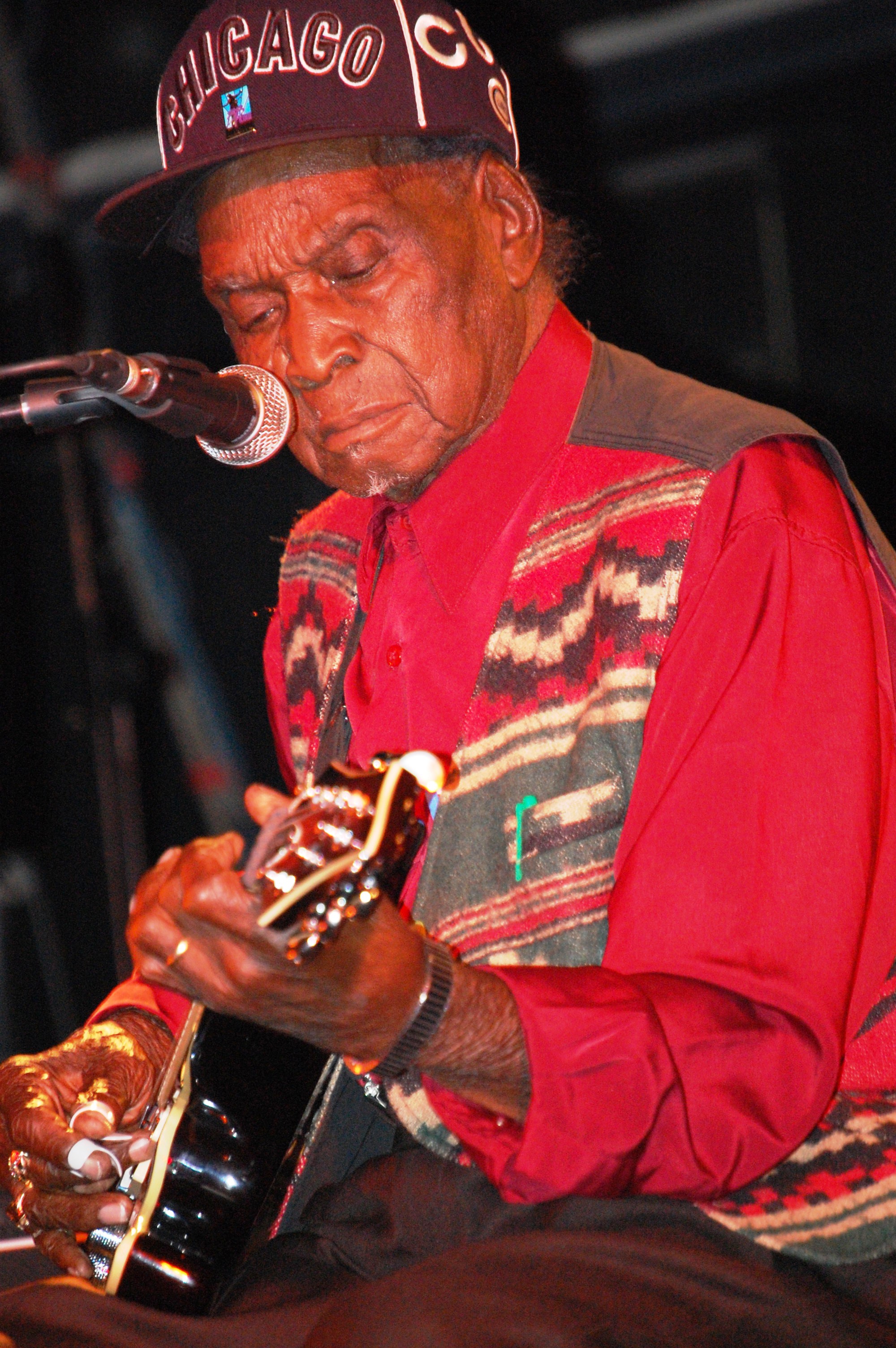
I was very fortunate to see Dave ‘Honeyboy’ Edwards perform. He’d been with Robert Johnson on the night he was poisoned. To get the opportunity to talk to him was an honour.


If only he had lived to perform in that concert in New York in Carnegie Hall! If only he had gone on to produce fifty years more music! What a performer. What a songwriter. What a guitarist. Even with such a limited number of songs recorded on portable equipment in hotel rooms he knocks the socks off nearly everyone! Genius!
If only that landlord hadn’t poisoned him!!
Robert Johnson – The King of the Delta Blues Singers
Robert Johnson was the King of the Mississippi Delta Blues singers. At least that was the title conferred upon him by white advocates of the Blues in the 1960s. It was also the title of that extraordinary album of his music put out in the 1961.
Back in the sixties Blues albums were hard to come by. There were a little group of us who used to scour the music shops, going through the bins in search of the old cardboard covered Folkways albums featuring the authentic Country Blues. We would head off up to London to check out Dobells in Charring Cross Road which stocked Blues albums. Blues was, perhaps rather naively, considered to be an authentic music – not sullied by commercialism. It was not so tainted by pop production as the stuff in the charts.
That first album was revered. It depicted a painting of a black man in a striped shirt and brown trousers, sitting on a chair, playing a guitar. The background was brown and grainy looking like the reddish brown dirt of Mississippi.

The painting had the perspective of looking down at the scene. There was a stark shadow as the singer was sitting out in his yard on a bright Mississippi day.
At the time nobody had any idea what Robert Johnson looked like. I used to look at that cover and think it was meant to represent him. I now know it looks nothing like the photograph of the man in the suit that came to light later on – only one of two or three known images of Robert that exist. It was just the record company looking for a suitable image for the album. It had little to do with Robert.
But that album had quite an impact. Just sixteen tracks. It set a standard for both guitar playing and composition. The remaining thirteen tracks that Robert had recorded in those two sessions, plus alternative takes, were not destined to be released until 1970.
So was he really the King of the Delta Blues singers? That is highly disputable. Certainly there were many great Blues singers from that region, at that time, who had far greater recording success and notoriety. There were Blues singers such as Texas Alexander, Blind Lemon Jefferson, Son House, Big Joe Williams, Skip James and Bukka White; all of whom might well have a reasonable claim. Then later, more electrified performers such as Elmore James, Muddy Waters or Howlin’ Wolf, might aspire to that title.
How can anyone confer a title of King?
What does it matter? Nobody can doubt his ability. His voice, guitar playing and song writing was extraordinary. It led Eric Clapton to say he was the greatest Blues Singer who ever lived and for Jimi Hendrix and Keith Richards to cite him as a great influence.
The music legacy he left behind is scant. Just those twenty nine tracks and twelve alternative takes recorded in makeshift studios in hotel rooms in San Antonio and then Dallas in 1936 and 1937. Yet those songs were amazing. Songs like Cross Road Blues, Sweet Home Chicago, Come On In My Kitchen, Hellhound On My Trail, and Terraplane Blues would find their way on to so many Rock albums and set lists. The guitar playing was so fast and intricate that many claimed that the tracks had to have been speeded up as they were impossible to play. The influences those twenty nine tracks had were enormous.
As for his story – well that too is remarkable.
Robert Johnson was an itinerant Blues Singer. Rather typical for his day. He was one of a number who would travel round the South busking on street corners, playing juke joints, barbeques, dances or inns, and scraping a living in hard times through performance.

It was Eddie ‘Son’ House who taught him how to play – and here is where the myth begins. It was reported that he hung around with Son and other performers learning the rudiments, and then he disappeared to come back a year or two later having completely mastered the instrument. The transformation was immense. Nobody could believe how good he had become.
It was that transformation that fuelled the myths. Overnight Robert had changed himself into a guitar wizard. Rather than believe that this was a case of hard work and practice perhaps the story started up that he had sold his soul to the devil in return for guitar expertise. Perhaps Robert played up the story. He was reputed a showman. He might well have considered that it gave him an allure. But more likely was the fact that this myth only started up much later when white reporters began taking an interest due to Robert Johnson’s importance to white Blues performers.
It seems to me that this was Son House regurgitating a myth that had circulated regarding that other guitar wizard Tommy Johnson. Son liked to impress the white men who sought him out. They lapped it up and he told them what he thought they wanted to hear so the myth grew.
Mississippi was like a third world country, full of black slaves and superstition. Underlying the Christian religion were the old African superstitions – The Ju-Ju, Mojo Hand, John the Conqueror and the Voodoo of the shaman and Voodoo Queens. The Blues is steeped in that Voodoo imagery.
Robert was reputed to have gone to the crossroads at midnight to make a pact with Satan. The Satan concerned was no Christian Satan, but rather the African Voodoo Devil Papa Legba.
Of course, this never happened, but it added a bit of mystique to the tale. Though maybe this superstition had played a role in Robert’s chosen career.
Robert had married early but his sixteen-year-old wife had died shortly after in childbirth. The family blamed it on his singing of secular songs. Perhaps Robert believed that and felt guilty. Or perhaps the experience – the pain and ostracising, just pushed him out on his journey. He decided that the settled life of raising a family and farming was not for him. He started out on his short journey as an itinerant singer.
Robert wandered from town to town performing and enjoying life. He had an eye for the women and whiskey. It was said that he had a pretty girl in every town.
We have been left with scant knowledge of his life and very little of the songs he was performing – just twenty nine tracks. Not enough to see the entirety of his range.
We unfortunately only have one side of Robert’s repertoire. He had many other facets. Out on street corners he would busk with the popular songs of the day. At the Jukes, Dances and Country Barbeques he was expected to entertain and get people dancing while in the inns and taverns it was a different set of songs. It was said that he had a musical ear and could play any number after hearing it once. He was reputed to have known hundreds of songs.
So how did those recordings come about?
Don Law was an Englishman who secured work recording artists for ARC. He was recommended to record Robert by a talent scout called Speir, who ran a General Store. As it was Robert himself who had approached Speir it is probable that he considered himself ready for a next step.
Don was probably the only white person that Robert ever performed for and he probably knew intuitively that Don would just want the Blues numbers. So we will never know the full extent of Robert’s large repertoire as the popular ballads, vaudeville songs and Pop songs that he also played were never recorded. All we have are twenty nine masterpieces, recorded on makeshift equipment, all first takes, and all immaculate – the voice, guitar and songs – all equally brilliant. He was reported to have been so shy of playing to a white man that he turned to face the wall to record. But this might not have been shyness so much as acoustics.
Those tracks were released as a series of 78 rpm singles and sold quite well. They brought him to the attention of Colombia record producer John Hammond. He was planning a big showcase concert at Carnegie Hall in New York in 1938 to promote black music. It was called ‘From Spirituals to Swing’ and he wanted Robert to represent that Mississippi Blues style.
Who knows what that would have led to? It certainly would have meant more recordings. It would have brought him to the attention of a white audience. It could have ignited his career.
Unfortunately none of that happened. John sent Don Law to find him but they merely heard reports of his death. At the age of twenty seven Robert Johnson was dead. He took with him all those future songs, all the other songs he knew. All lost.
The myths did not stop there. The tales of his death became equally bizarre. He was said to have become possessed by the devil, crawling around on all fours howling. Others said that he died of syphilis. There was talk of a ruptured aorta as a result a congenital disease – Marfan Syndrome. But all that is mere conjecture.

I had the opportunity to speak to Dave ‘Honeyboy’ Edwards who told me that he was with him the night he was murdered. They were playing together at an inn situated on the outskirts of Greenwood – two young men, enjoying themselves, entertaining, and trying to earn a buck or two. Dave said that Robert was making eyes at the landlord’s wife. The landlord gave him a bottle of whiskey that he’d adulterated with rat poison. Robert drank it. Later that evening he started feeling ill and left to go back to his room. Dave did not really think it was anything serious and expected to see him around the next day. After a few days he called and was told Robert had died. A similar story was told by Sonny Boy Williamson who claimed to have been with him at a Country Dance near Greenwood when he was poisoned. Who knows?
There was no great fuss, no autopsy, no police investigation – just another young black man dead. Life was cheap. He was not greatly well known or revered in the black community. He was not a major artist. He was just Robert Johnson – an itinerant busker. He was buried hurriedly in an unmarked grave.
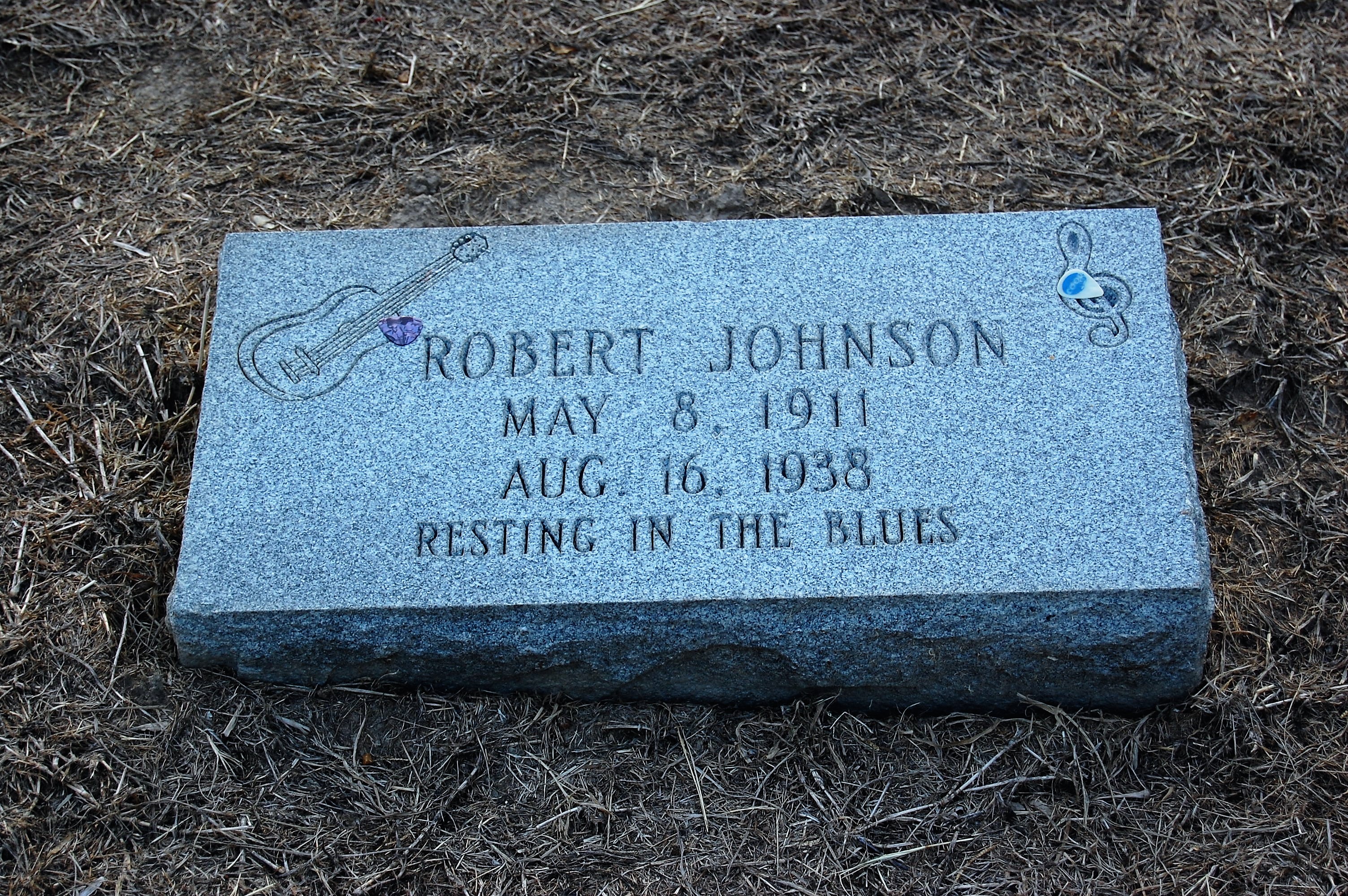
Robert now has three graves – all with markers on. I visited all of them.


According to Dave ‘Honeyboy’ Edwards, who also claimed to have been there when they buried him, it was the small marker behind the old wooden church that was the site of the real grave. But he said that it was unmarked for decades and after all those years nobody could quite remember the exact spot.
Twenty nine wonderful songs. That’s all. Twelve alternative takes. There could have been so much more. He was only twenty seven.
I like to think that in a parallel universe he hadn’t been poisoned and had gone on to perform at Carnegie Hall and record many other albums. I like to think that he played in front of white audiences and received all the adulation he deserved.
What a treasure trove we would have had.
I also like to think that I would have been able to see him just like I did with Skip James, Bukka White, Muddy Waters, Big Joe Williams and Son House.
My alternative self would have loved that!
What a great loss.

We can trace back the history of most modern Pop and Rock to its roots in African Music through Blues that originated in the Delta region of the United States.
That style of music, using African rhythms with western instruments, originated around the turn of the 20th century.
By the 1930s it was being recorded and one of the leading exponents was Robert Johnson. He was only 27 years old when he died and recorded only 29 songs along with 13 alternative takes in two recording sessions. The first session took place in a hotel room in San Antonio in 1936 and the second in an impromptu studio in Dallas in 1937. Yet those tracks have become legendary and fed not just into Blues but Rock too. No end of big acts have covered his songs, including the likes of Cream. Captain Beefheart and the Rolling Stones, and no end of others have been directly or indirectly influenced.
Much has been made of Robert’s revolutionary guitar style. Some even go to the extent of suggesting the recordings have been speeded up because it is so difficult to play. What cannot be denied is the quality of the songs and the impact they have had.
Unfortunately Robert was never heard by a white audience. In 1938 John Hammond, not knowing of his death, tried to get hold of Robert Johnson to appear at Carnegie Hall in the First of his Spirituals to Swing concerts. Just imagine if Robert had not been murdered and that had concert had happened? They replaced him with Big Bill Broonzy who gained some notoriety in Europe. Robert might have recorded a lot more and even tour Europe.
But it isn’t just the musical legacy that is so captivating. A whole mythology sprang up around him – probably because so little is actually know about the man.
Son House claims to have taught him the rudiments of the guitar and been amazed by his progress. Seemingly he disappeared for a while and returned with this amazing ability. That led to all the tales of him having sold his soul to the devil at the crossroads.
Then there were the stories of his strange death. He was reported to have crawled around howling like a dog. There are many doubts as to the poison used. Someone even claimed that it was syphilis that he died of.
There are also many versions of the night he was poisoned. Was he playing with Dave ‘Honeyboy’ Edwards or Sonny Boy Williamson or both?
Finally there are many versions as to where he was buried. While in Mississippi I visited all three.
This is one of those graves.


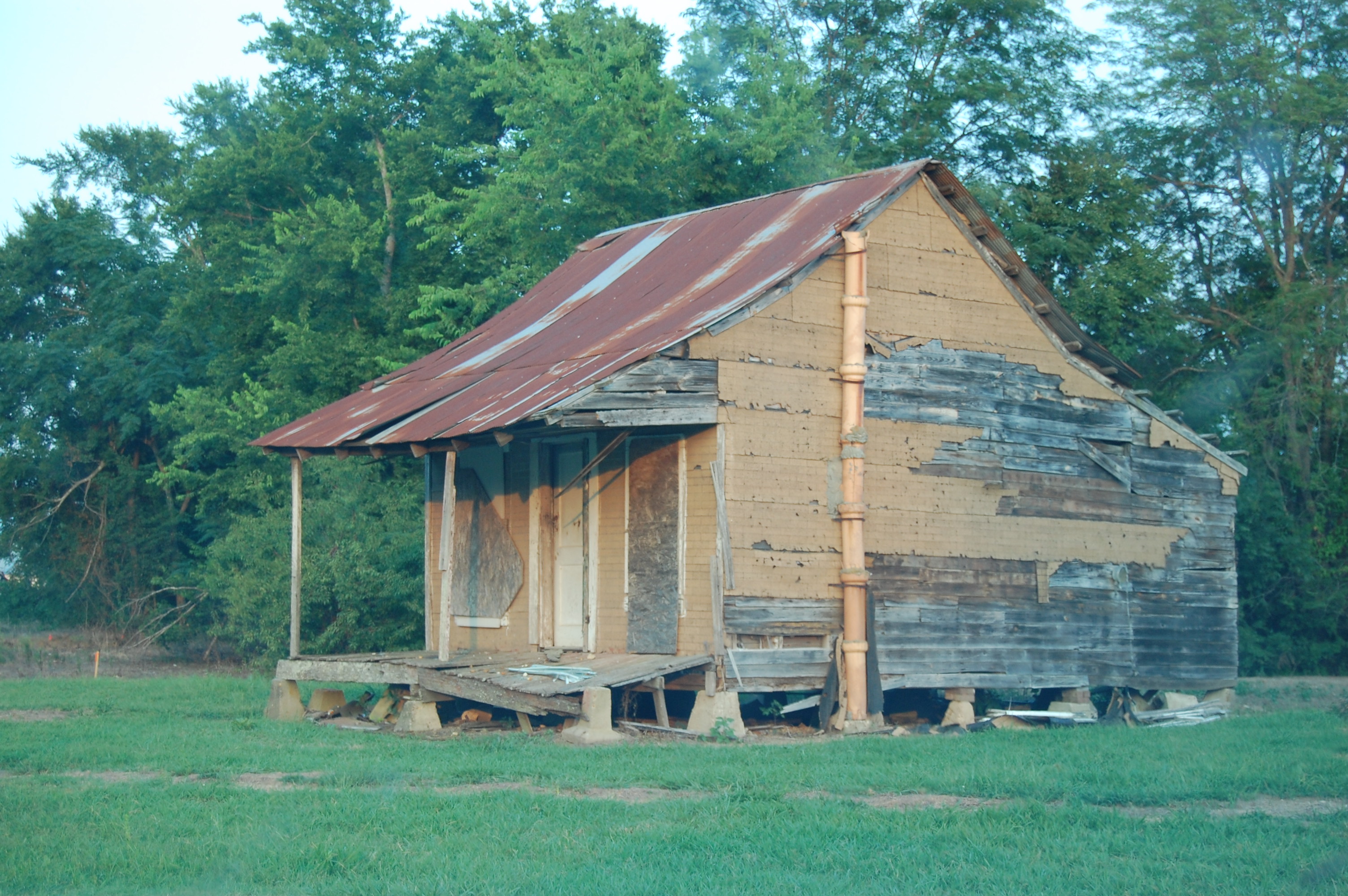
This is the grave that Dave Honeyboy Edwards says is the real grave.


That is the grave away in the distance in a field at the back of the church.
Probably it was somewhere unmarked. He was put in a paupers grave and that was most likely to have been left without any markings whatsoever and very difficult to remember its exact location years later. Some say it was under a tree. Who knows for sure?
The important thing is that he is being recognised for what he achieved.
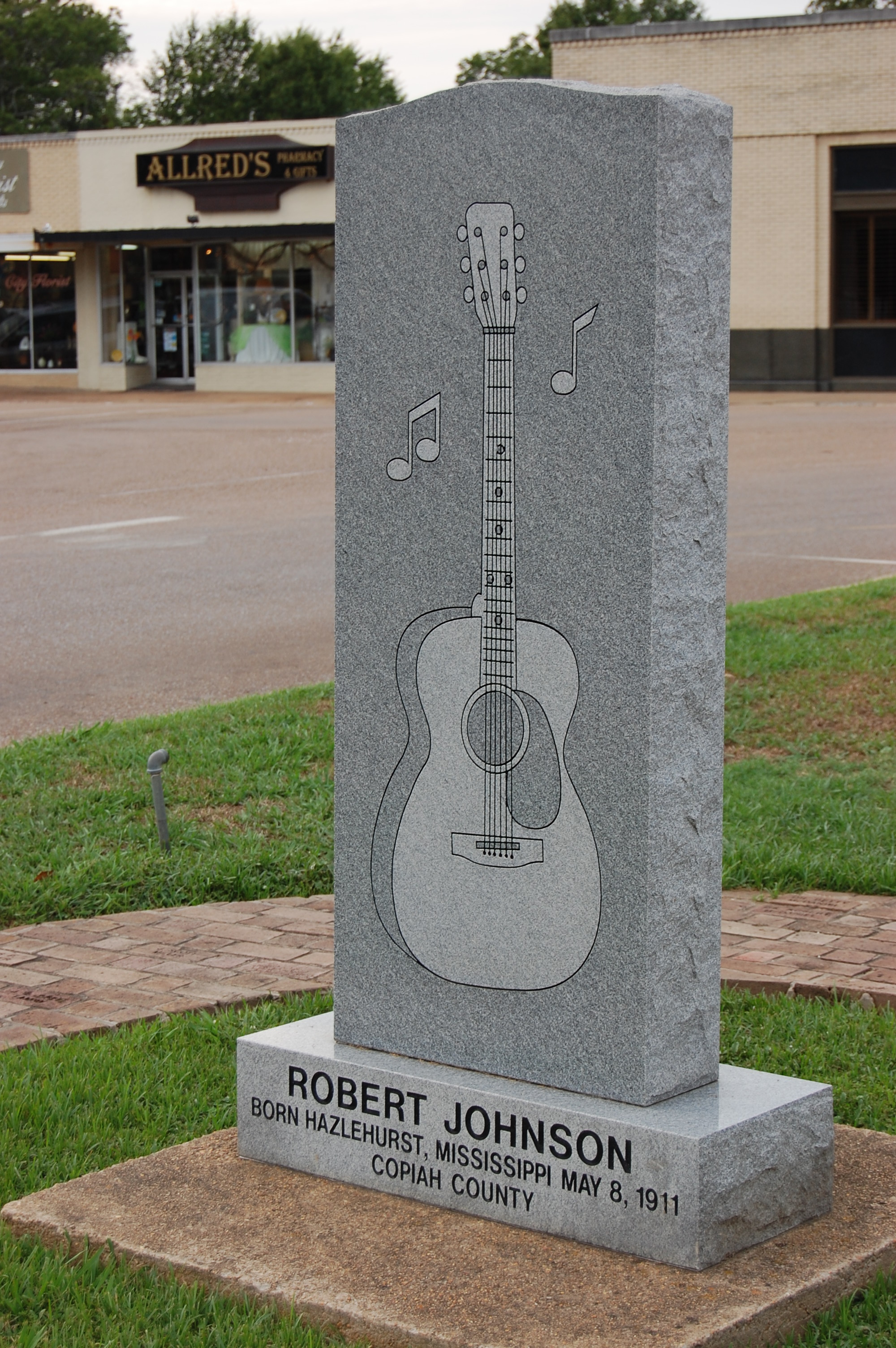
Below is the plaque that Eric Clapton had erected to Robert’s memory in Hazlehurst – his place of birth.


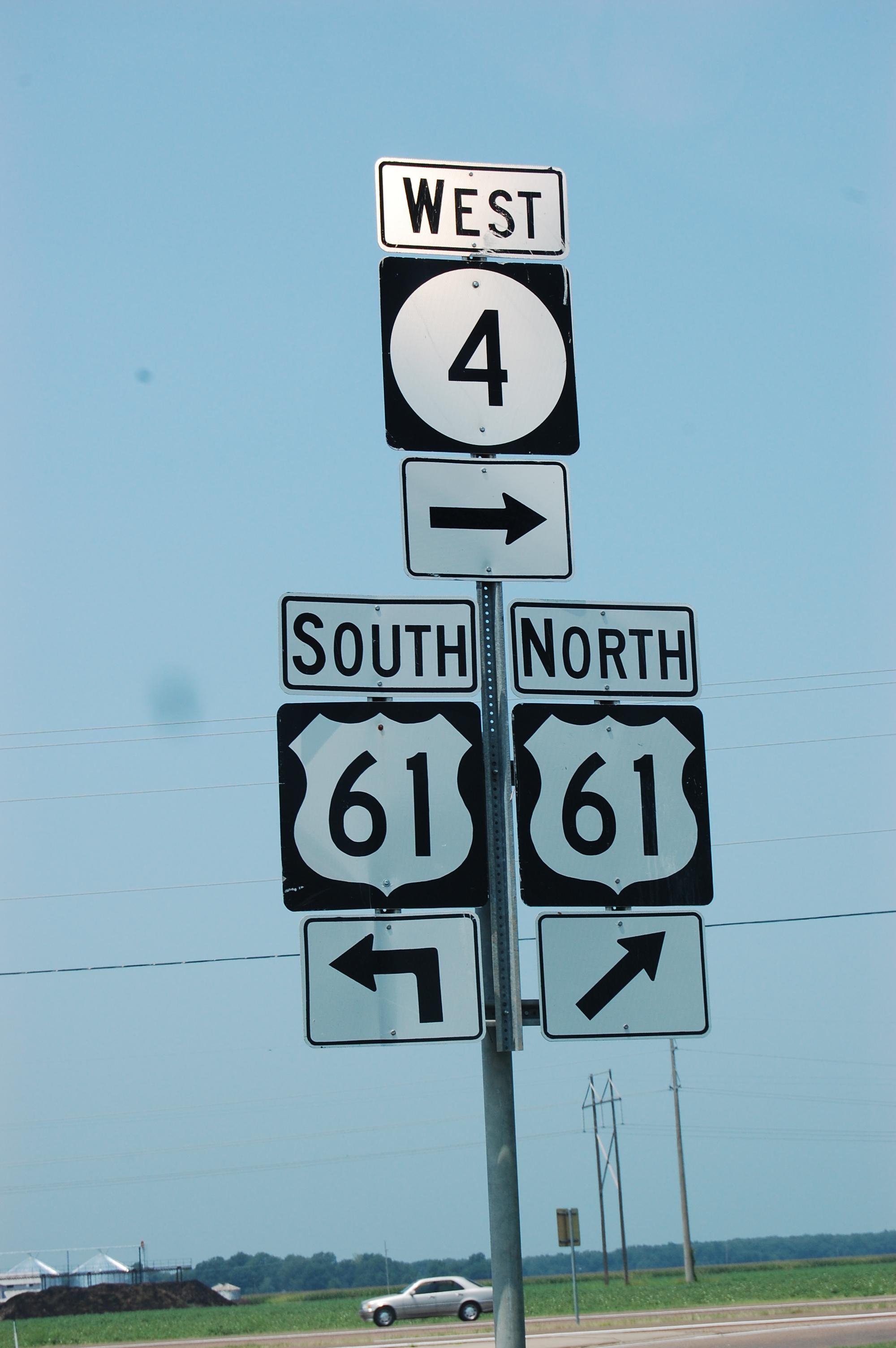
The story of the devil and the crossroads was a recurring theme in old blues stories. Back before lights, in those rural settings, it must have been dark and scary out on those country roads of Highway 61. The imagination can produce all manner of tricks.

I’m playing my old vinyl album – King of the Delta Blues Singers – and thinking of Robert Johnson and what might have been.

Americans don’t seem to value the rich Blues heritage that sits on their own doorstep. Despite the fact that nearly all modern music stems from the roots of the Blues, R&B and Jazz that came out of Mississippi, Louisiana, Texas and Tennessee (Mixed in with a bit of Country and a few other flavours) they ignore it. If you talk to most Americans about the significance of Charlie Patton they will likely say – ‘Who?’. So I was heartened to find they had gone to the bother of putting up blue plaques all other the place commemorating where all the great Blues Singers worked, lived, played and died. It gave all us mad Blues lovers a reason to gallivant all over the countryside hunting them down.
I was a little chastened when looking for Son House’s plaque I stopped at a big tourist centre, right close to where it was, to ask and they’d never heard of Son House, the Blues Trail or anything to do with it. Asking around it seemed like it was mainly a bunch of fanatical Englishmen like me who were the only ones going round.
Great shame.


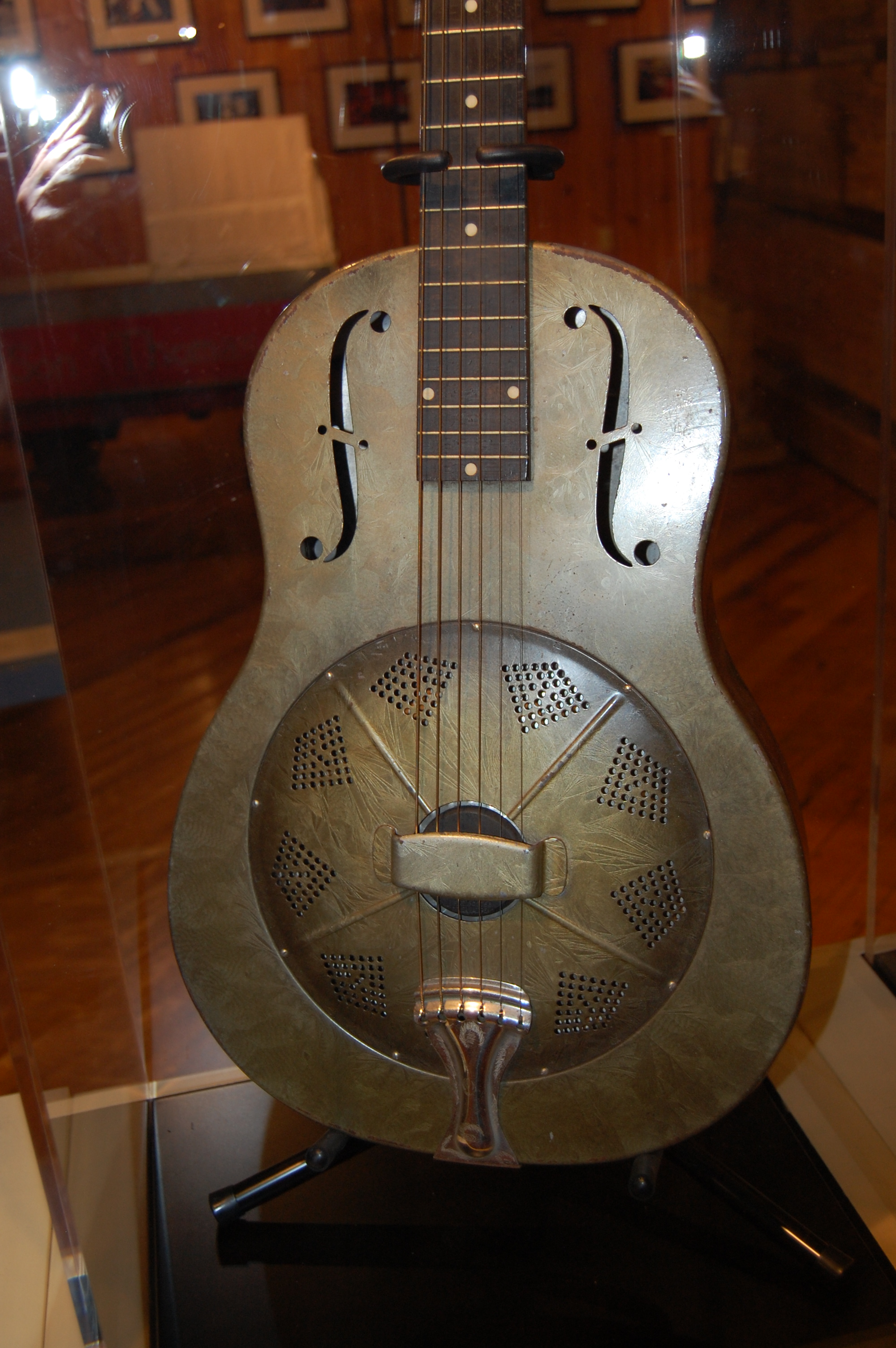
This is a national steel guitar in the Delta Blues museum. The type many old Blues guys played in the days before amplification because it made a loud sound. I love the sound of a bottleneck guitar.

This was the monument to Robert Johnson in Hazlewood

This is the High Street in Yazoo – One of the Great Blues labels of the day.

The fabled Highway 61 – along which all the Blues guys travelled.

Muddy Waters cabin – re-erected in the Delta Blues Museum (I wish they’d left it where it was on the plantation).

A plaque to Son House (I think that was in Clarksdale)

The Riverside Hotel where everybody stayed. It used to be a hospital for Blacks and is where Bessie Smith died.

Sonny Boy Williamson 2’s grave (Willie Rice Miller) outside Tutwiler

Sonny Boy’s grave was hard to find – in the middle of nowhere, set back off the road.

One of Robert Johnson’s supposed graves (according to Dave ‘Honeyboy’ Edwards not the right one)

The Blue Café – a Blues Joint where it all happened (And still does)

I’d been all over Mississippi hunting out the old haunts, graves and places where the old Blues guys had played.
I visited all three of Robert Johnson’s graves.
Dave was an amazing guy. He was eighty four when I saw him and died two years later. He was full of life.
I had a chance to have a little chat with him after the show. Dave had been with Robert Johnson playing in that bar in Greenwood in 1938. He told me that Robert had been making eyes at the wife of the barman and had been poisoned with strychnine rat-poison. He became ill and had to go home but they hadn’t expected him to die.
He also told me that the real grave was at the back of the church.
It was incredible to meet a legend who had been there right at the beginning of modern day music. Without the Blues we wouldn’t have had Rock.
I just wonder what it would have been like if Robert Johnson had lived.


Here’s the essential tracks for the early Blues. Once you start getting into these you can progress to the next three thousand essential tracks.
I think this could generate endless debate as to why I put some in and left others out – It’s all down to personal taste. Listen to ’em and make your own choices. I can only point you to what I think is the best.
| Son House | Death letter blues
Pearline Delta blues Walking blues The pony blues |
| Robert Johnson | Dust my broom
Sweet home Chicago Come on in my kitchen Crossroad blues Love in vain Terraplane blues Walking blues Last fair deal going down Stop breaking down blues Milkcow’s calf blues |
| Bukka White | Shake ‘em on down
Fixin’ to die blues Parchman Farm blues |
| Sleepy John Estes | Ollie blues
Broke and hunger Black Mattie The girl I love she got long curly hair |
| Skip James | Devil got my woman
Hard time killing floor I’m so glad |
| Big Joe Williams | Baby please don’t go |
| Kokomo Arnold | Milk cow blues
Busy bootin’ The twelves Salty dog |
| Bo Carter | Pig meat is what I crave
Banana in your fruit basket What kind of scent is that Don’t mash my digger so deep |
| Hambone Willie Newbern | Rollin’ & Tumblin’ |
| Tommy Johnson | Canned heat blues
Cool drink of water |
| Charlie Patton | Spoonful blues
Shake it and break it High water everywhere |
| Furry Lewis | Shake em on down |
| Blind Lemon Jefferson | Match box blues
Broke and hungry |
| Blind Willie McTell | Statesboro blues
Broke down engine |
| Blind Willie Johnson | Dark was the night cold was the ground
You’ll need somebody on your bond Nobody’s fault but mine God moves on the water |
| Sonny Terry/Brownie McGhee | Sitting on top of the world
Rock Island Line Step it and go |
| Memphis Minnie | Chauffer Blues
Hot stuff Selling my chops Dirty mother for you Bumble bee blues You dirty mistreater |
| Peg Leg Howell | Tishamingo blues |
| Lightnin Hopkins | Katie Mae
Let me play with your poodle Blues in the bottle Bottle up and go |
| Leroy Carr | How long how long blues
Mean mistreating Mama |
| Texas Alexander | Leevee camp moan |
| Gus Cannon | You can’t blame the coloured man |
| Bessie Smith | T’aint nobody’s business if I do
Careless love St Louis blues I’m wild about that thing Gimme pigfoot Do your duty |
| Victoria Spivey | Black snake blues
Dope head blues Organ grinder blues |
| Lucille Brogan | Shave ‘em dry |