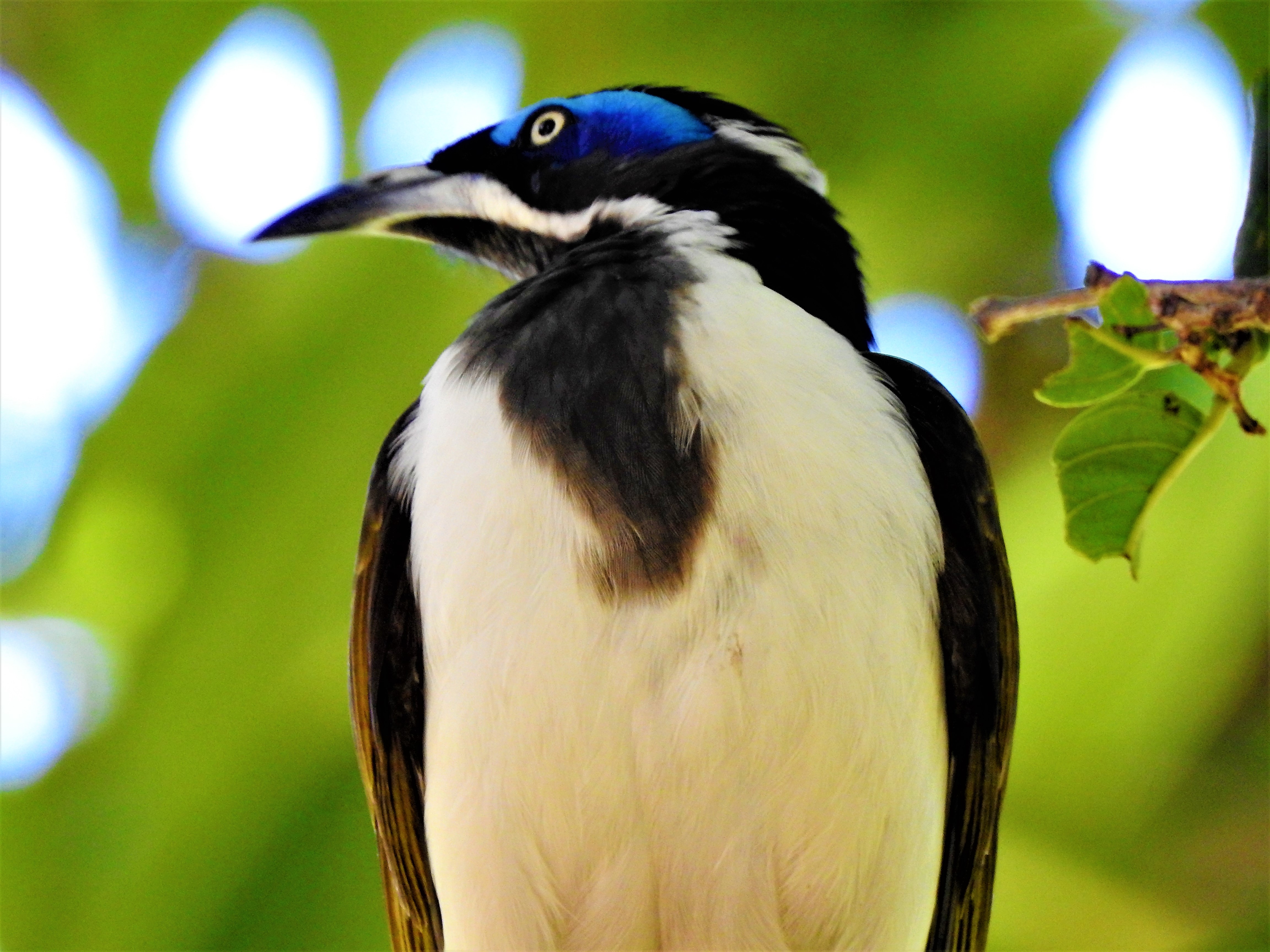
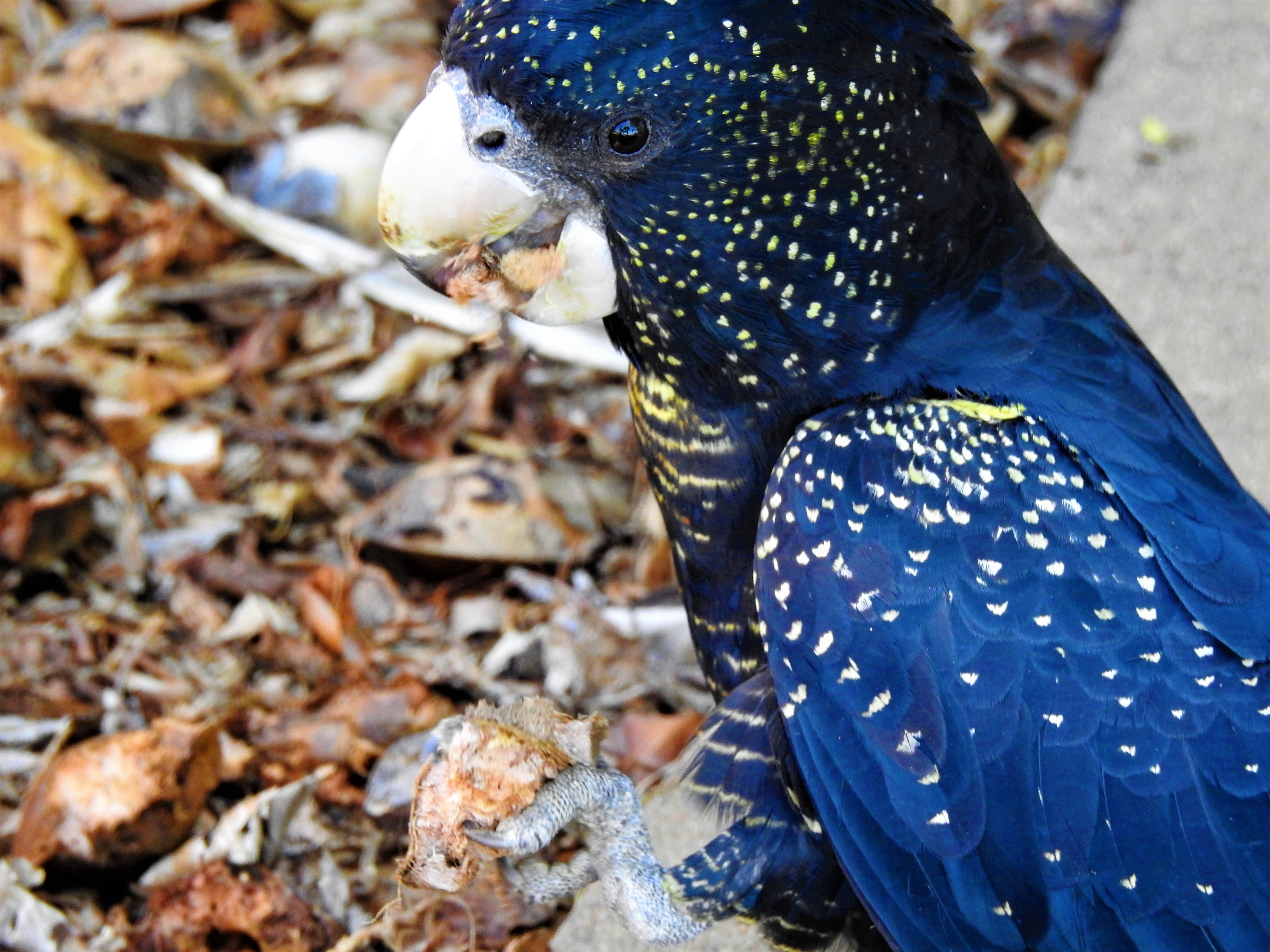
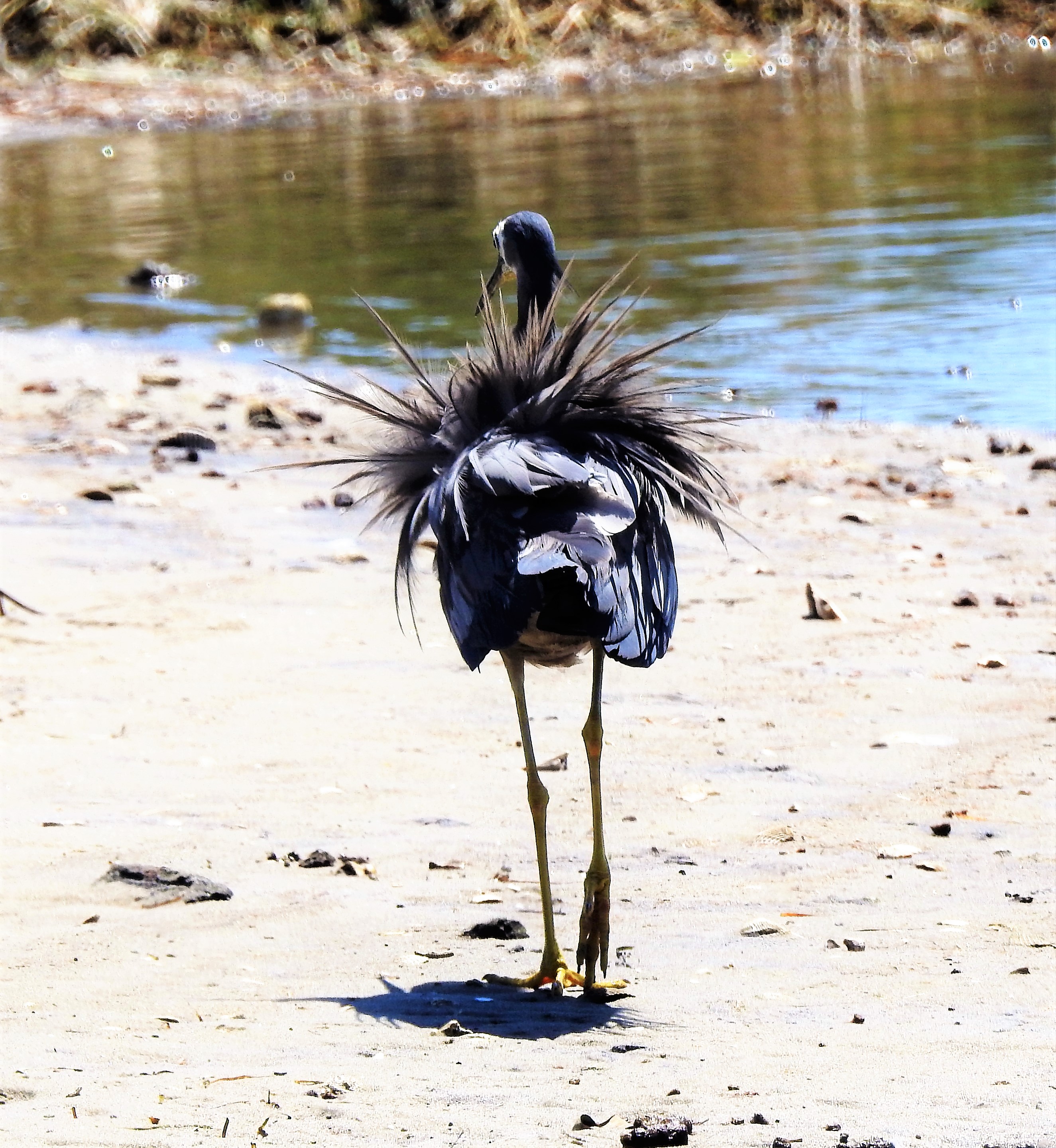
A number of other Australian Birds.


One of the great things about the Far East is Fruit Bats. I love them. Hanging about and flying around. Great colonies of Fruit Bats live in the cities. At dusk they take to the air in large numbers. A great sight.
We came upon a few trees packed with Fruit Bats in the middle of the park.


They’re big!!


As a Biologist I am dismayed by the destruction of nature I have witnessed in my own lifetime.
As a boy I played in the fields and meadows, collected frogspawn from the ponds and snakes, lizards and slowworms from the heaths.
The meadows were awash with colour, adorned with all manner of flowers. When you lay back in the long grass there was a buzz of insects, a multitude of bees attended the blossoms, grasshoppers stridulated, beetles crawled through the undergrowth. golden eyed, luminescent green lacewings flew by, hoverflies wavered in the air, butterflies of all hues bobbed over the fields. In the air above house martins, swallows and swifts zipped and soared. The swifts shrieking in delight as they fed off the abundant insects. A journey in the car resulted in a splattered windscreen. Clouds of insects hung in the air around lamps.
The streams were alive with red throated stickle-backs that darted from cover to cover. The ponds were full of globes of frogspawn each spring. Thick with pond weed in which the newts and frogs sheltered.
The heath rustled as lizards and snakes darted into the dry undergrowth. We’d dive and catch them. We’d move the old corrugated iron and collect the grass snakes and slowworms.
I dug a big pit at home with a pond in which I kept my creatures.
Every year we’d collect the Puss Moth caterpillars and Poplar and Eyed Hawk moth caterpillars from the poplars and willow, Drinker Moths from the grass, and Privet Hawk Moth caterpillars from the privet hedges. I’d rear them to moths and release them.
I’d breed the voles, rear the tadpoles to frogs and toads, and delight in nature.
Back then I did not realise that even that was just a mere vestige of what once had been. Back in the days of King Harold – 1066 – England had been one vast forest full of bears, wolves, beavers, otters and wild boar. When Harold marched to and from Stamford Bridge to first defeat Harold Hardrarda and then lose to William they travelled through trails in the forests not roads. I doubt they saw the sky. Those forests were cleared and the animals that lived there in abundance destroyed with them. I lived in the green patchwork fields that were a desert compared to before. Yet they were still full with that rump of life.
In my lifetime the decline has been rapid. The fields no longer buzz, crawl or bob with insects. The car no longer gets splattered. The skies are not full of swifts. The streams are either culverted or stagnant, devoid of darting fish, the ponds are devoid of newt, frog or spawn. The heaths no longer rustle with lizards and snakes. Hedgehogs are no longer squashed on the road. They have all become rarities. No longer do little boys go collected their frogspawn or jars of fish or hunting lizard and snake. The butterfly nets are a thing of the past. Those creatures, once abundant, are not to be found.
Yet people still tell me that I am wrong. We are not destroying nature. No animals are being pushed to extinction.
The evidence of my own eyes both in England and across the world is a lie.
I despair.
More than 15,000 scientists from 184 countries issue ‘warning to humanity’ (CBC)
http://www.cbc.ca/news/technology/15000-scientists-warning-to-humanity-1.4395767
Could we set aside half the Earth for nature? (The Guardian)
https://www.theguardian.com/environment/radical-conservation/2016/jun/15/could-we-set-aside-half-the-earth-for-nature
Sixth mass extinction? Two-thirds of wildlife may be gone by 2020: WWF (CNN)
http://www.cnn.com/2016/10/26/world/wild-animals-disappear-report-wwf/index.html
How many species are we losing? (WWF)
http://wwf.panda.org/about_our_earth/biodiversity/biodiversity/

As a Biologist I like Genetic Engineering.
We now have the technology to insert genes. We can take a gene from any organism and insert it into another. We have successfully inserted luminescence genes from jellyfish into pigs who ended up with luminescent noses.
Just think – we could take a chloroplast producing gene, paste it into all animals and they would produce their own food, absorb carbon dioxide and give out oxygen. Well actually they wouldn’t. But they would reduce their food needs and give out less carbon dioxide.
We can replace defective human genes and replace them with working genes and thus eradicate all those horrendous genetic diseases.
We can put genes into crops that enable them to grow in arid conditions.
We can introduce genes that hugely increase the crop yield.
We can put in genes into crops that give resistance to disease and pests and thus no longer need expensive, dangerous pesticide sprays or herbicides. That would save our beleaguered insects. At the moment our bees, butterflies and flying insects are being massacred.
We could bring back to life extinct animals. Jurassic Park is becoming possible.
Of course there are many health and ethical issues to consider. We now have the power to engineer the perfect children. We could select for intelligence, looks and height as well as gender. But would that ever be desirable? Do we want designer babies?
Then there are the other considerations. Would the genes were engineer in be spread to other plants around? Would the chemicals produced in our crops to give them immunity have health risks for humans?
What are the risks?
Every time there is a new development there is a knee-jerk reaction against it. We don’t like change. And scientists, or at least the companies that employ them, do not do themselves any favours. They cut corners, lie, deny any wrong-doing and cover up their disasters. The nuclear industry is a good example. It undermines trust. People do not believe them.
GM is a good example too. Is it being rushed out too quickly? Is it safe? Are the huge companies just looking at the profit line?
Well, for me, I think GM is the future. We need a full and open debate about safety and ethics. But I am excited by the prospects it opens up. I think it is the start of a revolution that could be extremely beneficial for us and for nature.