Anecdote – Seeing the legend that is Son House

This is one of the highlights of my long gigging career.

537 Essential Rock Albums (I use the term loosely) – Number 20 – Son House

537-essential-rock-albums-cover537-essential-rock-albums-cover

Weighing in at number 20 on my all-time list is the great Son House. Took me straight back to where it all began.

  1. Son House – Death Letter Blues

Son House started it all. He taught Robert Johnson how to play. He was king back in the early thirties. That Mississippi bottleneck country blues played on that old beat up steel guitar created a sound that was going to beat its way all down the years to infuse Rock ‘n’ Roll and start up a revolution.

Son House was a leading exponent of the style. His playing was raw, sloppy and incredibly powerful. His anguished singing was equal to it. I was fortunate enough to see him perform even though he was an old man. As soon as he started playing it was as if someone had plugged him in to the mains. The energy shot through him and cauterised us. I have never experienced such a transformation and so much ferocity. The opening chords to ‘Death Letter Blues’ were like a thunder-clap!

This album was made after his rediscovery in 1964. He was already old and had to relearn the guitar and his own songs. You’d think it would be an insipid shadow of his old power but it wasn’t. It was awesome. The playing was crystal clear and startling. ‘Death Letter Blues’ is enough to send the hair standing up to the ceiling. He still had it in Spades, Diamonds, Clubs and Hearts.

Hearing him play was a revelation. The album had other great tracks like ‘Pearline’ and ‘John the Revelator’ but who needed more. This was plugged straight back into those steamy Mississippi nights.

This is a glimpse of where it all began. Heaven knows what he would have been like to hear as a young man! It must have been frightening!

If you would like to purchase one of my books:

Photography – The Mississippi Blues Trail – American heritage

Americans don’t seem to value the rich Blues heritage that sits on their own doorstep. Despite the fact that nearly all modern music stems from the roots of the Blues, R&B and Jazz that came out of Mississippi, Louisiana, Texas and Tennessee (Mixed in with a bit of Country and a few other flavours) they ignore it. If you talk to most Americans about the significance of Charlie Patton they will likely say – ‘Who?’. So I was heartened to find they had gone to the bother of putting up blue plaques all other the place commemorating where all the great Blues Singers worked, lived, played and died. It gave all us mad Blues lovers a reason to gallivant all over the countryside hunting them down.

I was a little chastened when looking for Son House’s plaque I stopped at a big tourist centre, right close to where it was, to ask and they’d never heard of Son House, the Blues Trail or anything to do with it. Asking around it seemed like it was mainly a bunch of fanatical Englishmen like me who were the only ones going round.

Great shame.

usa july 2008 301

This was Bo Diddleys plaque in McComb. One of my favourite guys. He used to busk in the street where this plaque was situated.

usa july 2008 345

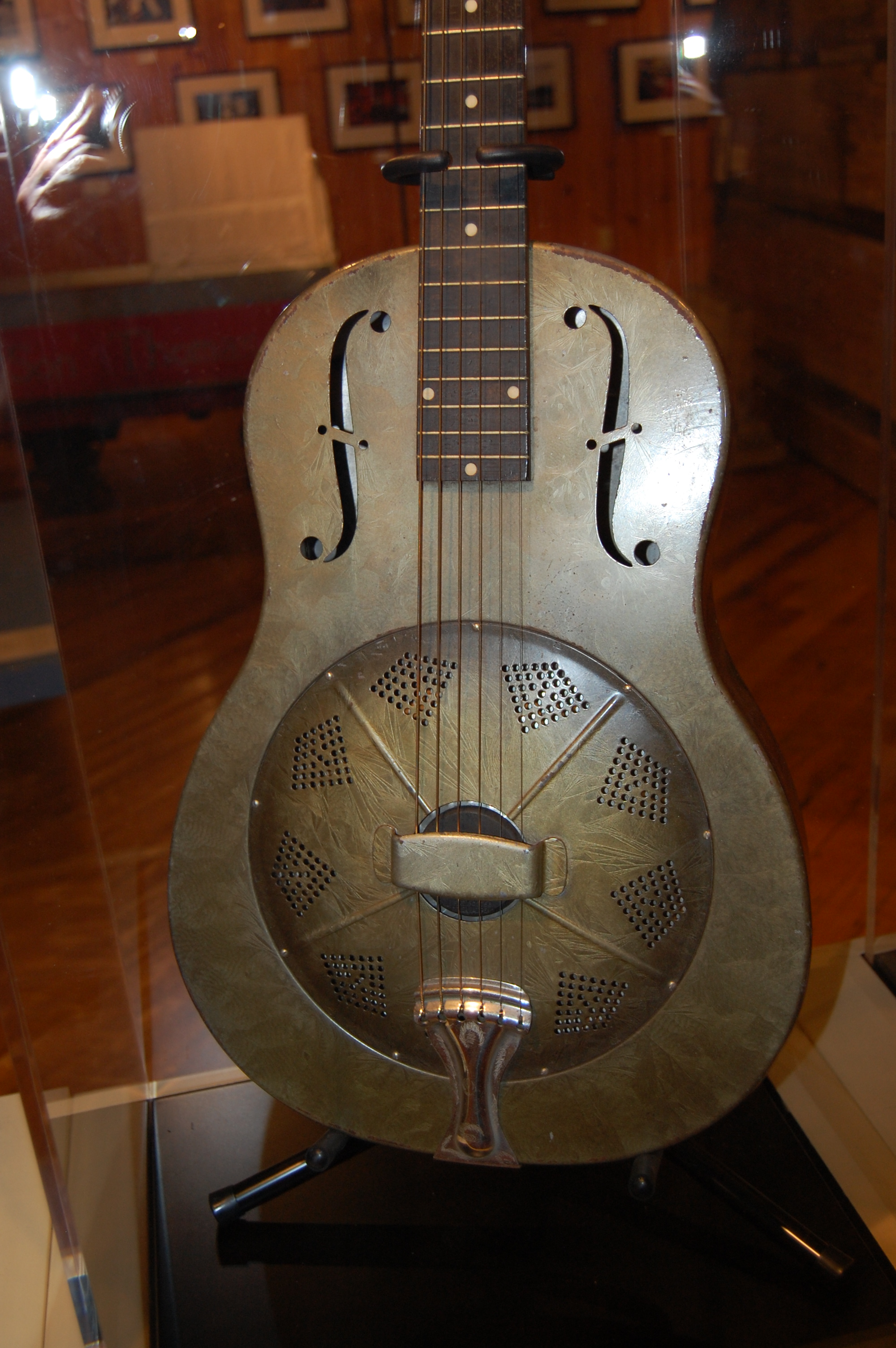
This is a national steel guitar in the Delta Blues museum. The type many old Blues guys played in the days before amplification because it made a loud sound. I love the sound of a bottleneck guitar.

usa july 2008 304


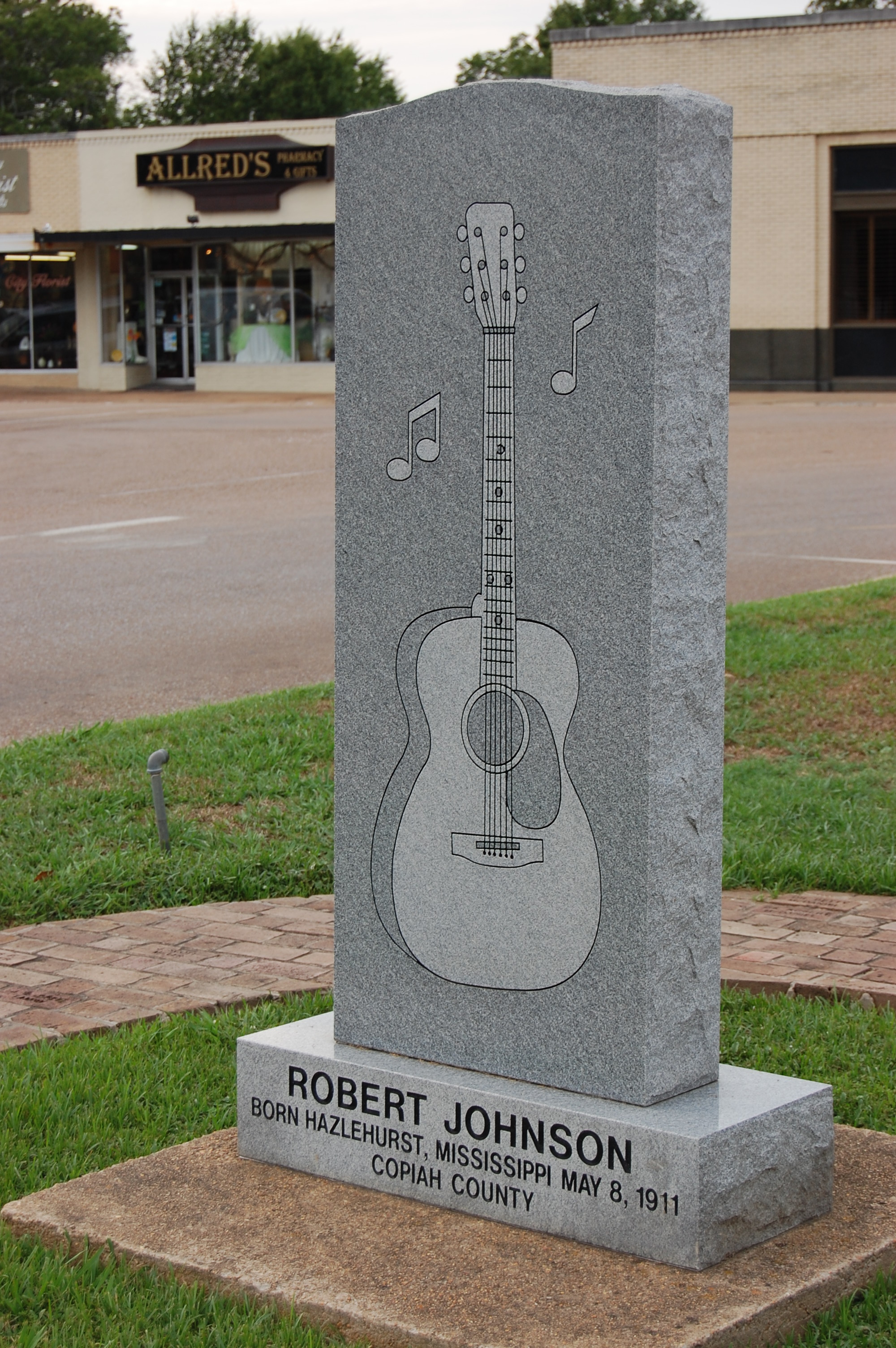
This was the monument to Robert Johnson in Hazlewood

usa july 2008 414

This is the High Street in Yazoo – One of the Great Blues labels of the day.

usa july 2008 325

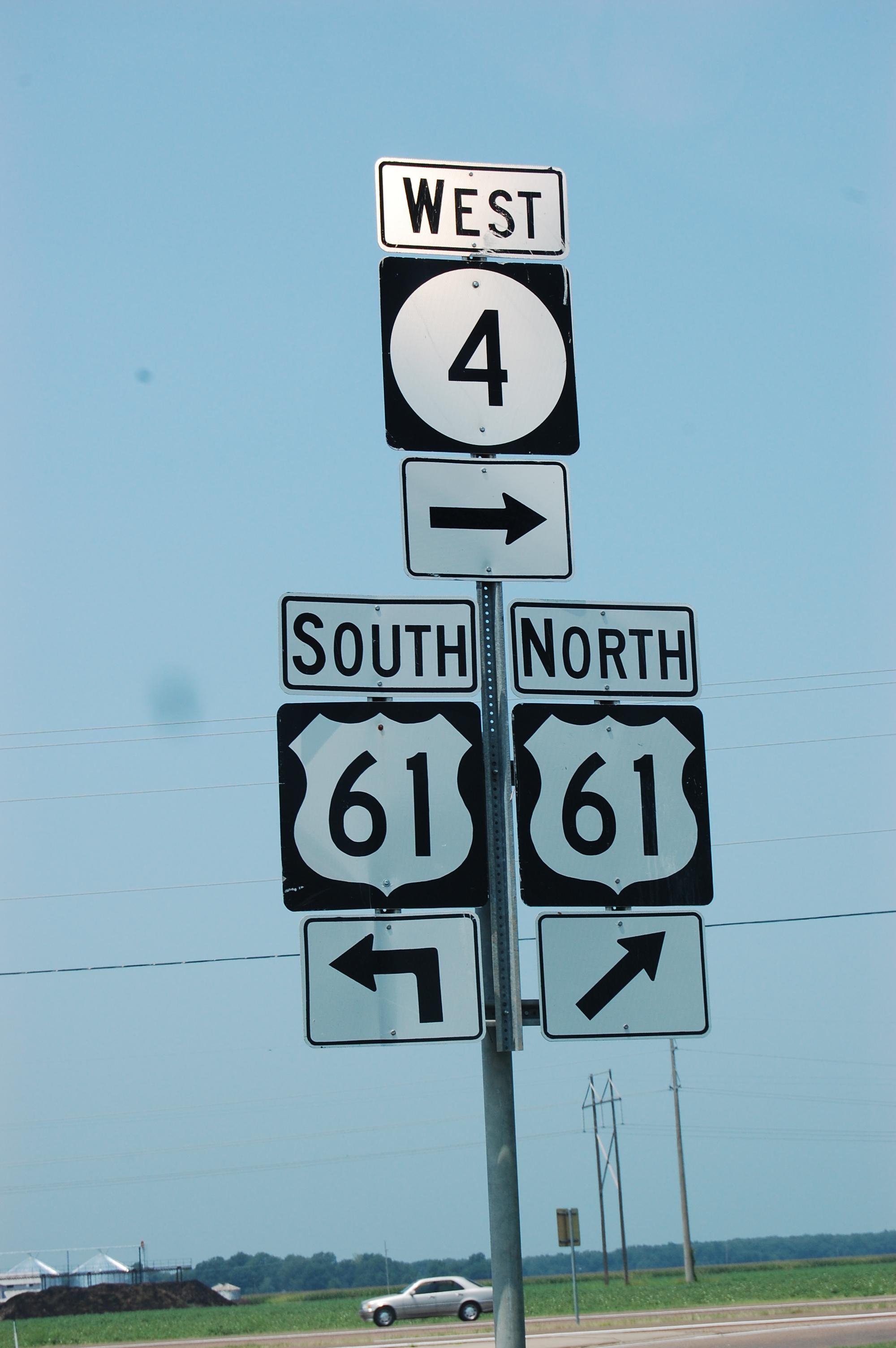
The fabled Highway 61 – along which all the Blues guys travelled.

usa july 2008 346

Muddy Waters cabin – re-erected in the Delta Blues Museum (I wish they’d left it where it was on the plantation).

usa july 2008 358

A plaque to Son House (I think that was in Clarksdale)

usa july 2008 361

The Riverside Hotel where everybody stayed. It used to be a hospital for Blacks and is where Bessie Smith died.

usa july 2008 377

Sonny Boy Williamson 2’s grave (Willie Rice Miller) outside Tutwiler

usa july 2008 381

Sonny Boy’s grave was hard to find – in the middle of nowhere, set back off the road.

usa july 2008 395

One of Robert Johnson’s supposed graves (according to Dave ‘Honeyboy’ Edwards not the right one)

usa july 2008 406

The Blue Café – a Blues Joint where it all happened (And still does)

Anecdote – Seeing the legend that is Son House

Son house Son-House-by-Dick-Waterman

Seeing the legend that is Son House

I’ve seen a few legends in my lifetime. Music has played a big part in my appreciation of the world.

It was 1967 the height of psychedelia and Acid Rock. I was all geared up with my discovery of Roy Harper and playing Captain Beefheart, Pink Floyd, Jimi Hendrix, the Doors and Country Joe and the Fish. What a great year.

But it was the new sounds that had grabbed me.

I was eighteen and roaring with a lust for life. I was packed with energy and up for anything. Life was good. I had a motorbike and a new girlfriend. My hormones, endorphins and neurotransmitters were all firing on maximum. The world was glorious.

The motorbike conked out many decades back but the girlfriend is still going strong!

I had been into blues for four years ever since my mate Dick Brunning introduced me to Lightnin’ Hopkins. So it was no surprise that the poster caught my eye. There was a Blues package on at the Hammersmith Odeon. It was Delta Blues. Now I loved Delta blues. Robert Johnson, Skip James and Bukka White. I adored slide guitar. This package had a number of names that I was familiar with from albums I possessed – Skip and Bukka were there, Big Joe Williams, Hound Dog Tayler and Little Walter. It seemed like a dream come true. All I had to do was persuade Liz that it sounded like a fun night out.

That was cool. She was up for most things. We’d only been going out a couple of months. Anywhere was good if we were together. I’d played her some blues and she’d liked it.

On the night we all packed in to Hammersmith Odeon. There were so many on that they were limited to a few numbers each. Skip and Bukka were great. I was so glad I managed to see them before they died. Skip was extremely ill, but was still excellent. Big Joe Williams, who wrote Baby Please Don’t Go (the Them hit), went down so well that they couldn’t get him off the stage. Sonny Terry and Brownie McGhee were great too though more folk than blues. It was an excellent evening and chance to see the originators. But the stand out act was a complete surprise. It came out of left field.

Most of these Delta blues singers had been performing in the 1930s and 1940s. They had stopped performing during the war and had been dug out of obscurity when the sixties blues boom hit.

This old guy, in his late seventies, struggled out on stage. He was stick thin and frail with someone bringing his guitar in for him. I think everyone in the huge hall wondered what on earth was going on. We’d never heard of Son House. It looked as if this might be a step to far.

Eddie ‘Son’ House sat himself down and adjusted his guitar. He mumbled into the microphone incomprehensibly. It was funny. He sounded like the cartoon character ‘Hillbilly Bear’. A murmur and chuckle went round the auditorium.

Then Son started to play.

It was as if all the years dropped off him. I was hit by the power and driving chords of that guitar. I had not heard anything as forceful as that. His rich voice cut in and it ripped into me. This was the real thing. I had not heard anything like this before. There was such authority in his performance that I wondered how such a frail body could command so much from the audience. It shook everybody. Death Letter Blues was the most incendiary blues I had ever heard. After that first number we were up on our seats shouting for more. The whole hall was baying. Son performed a second number and then straggled off the stage dragging his guitar along the floor behind him. The roof went off the place. They were short of time but there was no way we were going to allow him to get away with that. Eventually he came back out without his guitar and sang a foot stomping John The Revelator. Then he was gone.

I never saw him again.

But I had seen a legend. I found out that Son was the start of it all. This was the man who had taught the great Robert Johnson to play, who had influenced the young Muddy Waters, and provided that impetus into electric blues and rock. You could trace it all back.

Whether it was Roy Harper, Captain Beefheart or Jimi Hendrix, this was where it had begun. Son House had been the flame that lit the touchpaper.

I had seen and heard the man who had started it all.

Son House was a legend.

Check him out here:

Recommended Albums – Son House – Death Letter Blues

537 Essential Rock Albums cover

This was number 20 in my book.

Son House – Death Letter Blues
Son House started it all. He taught Robert Johnson how to play. He was king back in the early thirties. That Mississippi bottleneck country blues played on that old beat up steel guitar created a sound that was going to beat its way all down the years to infuse Rock ‘n’ Roll and start up a revolution.

Son House was a leading exponent of the style. His playing was raw, sloppy and incredibly powerful. His anguished singing was equal to it. I was fortunate enough to see him perform even though he was an old man. As soon as he started playing it was as if someone had plugged him in to the mains. The energy shot through him and cauterised us. I have never experienced such a transformation and so much ferocity. The opening chords to ‘Death Letter Blues’ were like a thunder-clap!

This album was made after his rediscovery in 1964. He was already old and had to relearn the guitar and his own songs. You’d think it would be an insipid shadow of his old power but it wasn’t. It was awesome. The playing was crystal clear and startling. ‘Death Letter Blues’ is enough to send the hair standing up to the ceiling. He still had it in Spades, Diamonds, Clubs and Hearts.

Hearing him play was a revelation. The album had other great tracks like ‘Pearline’ and ‘John the Revelator’ but who needed more. This was plugged straight back into those steamy Mississippi nights.

This is a glimpse of where it all began. Heaven knows what he would have been like to hear as a young man! It must have been frightening!


In Search of Captain Beefheart – a memoir of a rockin’ life.

In search of Captain Beefheart cover

If you are looking for more of a memoir of a unique experience with Rock Music – into the Abbey Road Studio, to early Hendrix, Cream, Roy Harper and Bob Dylan, the British and American sixties Underground, then maybe this is the book for you:

This is the blurb:

The sixties raged. I was young, crazy, full of hormones and wanting to snatch life by the balls. There was a life out there for the grabbing and it had to be wrestled into submission. There was a society full of boring amoral crap and a life to be had in the face of the boring, comforting vision of slow death on offer. Rock music vented all that passion. This book is a memoir of a life spent immersed in Rock Music. I was born in 1949 and so lived through the whole gamut of Rock. Rock music formed the background to momentous world events – the Civil Rights Movement, Vietnam War, Iraq war, Watergate, the miners’ strike and Thatcher years, CND, the Green Movement, Mao and the Cultural Revolution, Women’s Liberation and the Cold War. I see this as the Rock Era. I was immersed in Rock music. It was fused into my personality. It informed me, transformed me and inspired me. My heroes were musicians. I am who I am because of them. Without Rock Music I would not have the same sensibilities, optimism or ideals. They woke me up! This tells that story.

If you want to read more then you can purchase it here:

Rock Routes – the definitive book on Rock Music.

Rock Routes

This is the introduction to my book Rock Routes. The cover is a photograph I took in Bill Graham’s auditorium in San Francisco in January 2013. It is the remains of the Grateful Dead – now called Furthur.

We were only in San Francisco for two days and had no idea they were playing. We were staying in a little ‘hotel’ (I use the word tentatively). The ‘landlady’ was clearing stuff away. I asked why. She told me that there was this band playing down the road and all the weirdos would come out of the woodwork.

I got tickets straight away! How lucky was that! They were superb!

Introduction

Rock is dead. That is what Jim Morrison proclaimed in 1970. He was wrong.

Rock is alive and well.

Rock as a universal unifying force for Youth Culture is dead. For most young people it would appear that music is incidental to their life. It has become a consumable product to be bought and discarded. For those to whom it is central it has become an easy recognisable cult with dedicated devotees.

It was not always the case.

In the 1950’s, 60’s and 70’s music was the focus for social change. It was the unifying force for fashion, politics, attitude, morality and social perspective. Rock was the vehicle that youth culture rode on. Its influence was universal. Rock ‘n’ Roll, Beat music, Psychedelia and Punk were world-wide phenomena. It is salutary to look back at the 60’s psychedelic phenomena and see long-hair bands complete with kaftans, bell-bottoms and accoutrements springing up all over the world including Peru, Afghanistan, Australia, Tokyo, Brazil, South Africa, Russia and Saudi Arabia. Everyone wanted to be part of the scene. They all wanted to be the Beatles, Stones, Floyd, Hendrix or Doors.

Everything now is controlled by the ‘Biz’ and run for profit.

I guess it was ever thus. It did not seem like it though. It seemed that the music was a revolution that was changing the world. It was made by us and controlled by us. It was not a product. It was an emotional portrayal of how we felt. It was ours, of us, by us and for us.

But then I’ve always been an idealist.


Well – I lived through it all. I’ve seen most of them and got to meet some of them. I have enjoyed a life-time of Rock Music. It has been central to everything I have done. It has affected my philosophy and impinged on every aspect of my life. I’ve lived it.


I am sitting here in 2013 looking forward over the next few weeks to a programme that includes Nick Harper, Roy Harper, The Magic Band, North Mississippi Allstars and Leonard Cohen. Wow! I’m looking forward to it. I’m 64 and still rockin’.


Back in the 1980s I ran an adult education on the history of Rock Music. I had great fun even though it cost me a fortune. My vinyl collection grew exponentially.


This book is an extension of that course. I first wrote a four volume book totalling 1500 pages entitled Rock Strata. It told the whole story of Rock Music through from the early 1900s to 1982. A publisher loved it. He loved my charts. He just thought it was a little too long. He wanted me to cut it down to 200 pages.


This is the rewrite of that attempt!


This book is the history of Rock Music up until 1982. I stopped there. I could have continued but it all rather broke up into fragments. There have been a number of those fragments that I continue to love but others I get frustrated by. I hate overproduced muzac for the hard of thinking. I hate product.


I love good, live, raw, loud, exciting music. I want my stuff straight from the heart, head and gut – not the bank.


This book shows how the different aspects of Rock Music developed and evolved. Nothing is ever new. True innovators are extremely rare. I’ve heard a few. Everything comes out of what has come before. You can always see where it has come from.


One of my Rock students started my course hating Country & Western. By the end of the course he had an extensive collection of 1930s/40s Country. He had ‘discovered’ it by looking at the influences acting on the music he enjoyed. He found it was stuff he’d never heard or listened to. He loved it.


This book tries to show you the things that influenced the music you love. Perhaps you will find other artists or genres you didn’t know about? Perhaps it will captivate you the way it has me?


It doesn’t matter what you love as long as you love something. It doesn’t matter if we love the same things. Half the fun is arguing the toss over songs, bands and genres.


The lists I have drawn up are not definitive; cannot be definitive. They are my view of what is the very best. I’m sorry if I’ve missed a few out. That’s bound to be the case. But I bet I’ve put a few in that you wouldn’t have thought of. Enjoy mulling them over and drop me a comment on my Opher’s World blog if you like it or if you don’t. I’m always keen to hear from you!


This is Rock Music – not Pop. This is my kind of stuff. I grew up with it. It changed me. I love it!

If you want to purchase it here’s the link:

Rock Music – Essential tracks – The Country & Vaudeville Blues – for my mate Tobes!

Here’s the essential tracks for the early Blues. Once you start getting into these you can progress to the next three thousand essential tracks.

I think this could generate endless debate as to why I put some in and left others out – It’s all down to personal taste. Listen to ’em and make your own choices. I can only point you to what I think is the best.

Son House Death letter blues

Pearline

Delta blues

Walking blues

The pony blues

Robert Johnson Dust my broom

Sweet home Chicago

Come on in my kitchen

Crossroad blues

Love in vain

Terraplane blues

Walking blues

Last fair deal going down

Stop breaking down blues

Milkcow’s calf blues

Bukka White Shake ‘em on down

Fixin’ to die blues

Parchman Farm blues

Sleepy John Estes Ollie blues

Broke and hunger

Black Mattie

The girl I love she got long curly hair

Skip James Devil got my woman

Hard time killing floor

I’m so glad

Big Joe Williams Baby please don’t go
Kokomo Arnold Milk cow blues

Busy bootin’

The twelves

Salty dog

Bo Carter Pig meat is what I crave

Banana in your fruit basket

What kind of scent is that

Don’t mash my digger so deep

Hambone Willie Newbern Rollin’ & Tumblin’
Tommy Johnson Canned heat blues

Cool drink of water

Charlie Patton Spoonful blues

Shake it and break it

High water everywhere

Furry Lewis Shake em on down
Blind Lemon Jefferson Match box blues

Broke and hungry

Blind Willie McTell Statesboro blues

Broke down engine

Blind Willie Johnson Dark was the night cold was the ground

You’ll need somebody on your bond

Nobody’s fault but mine

God moves on the water

Sonny Terry/Brownie McGhee Sitting on top of the world

Rock Island Line

Step it and go

Memphis Minnie Chauffer Blues

Hot stuff

Selling my chops

Dirty mother for you

Bumble bee blues

You dirty mistreater

Peg Leg Howell Tishamingo blues
Lightnin Hopkins Katie Mae

Let me play with your poodle

Blues in the bottle

Bottle up and go

Leroy Carr How long how long blues

Mean mistreating Mama

Texas Alexander Leevee camp moan
Gus Cannon You can’t blame the coloured man
Bessie Smith T’aint nobody’s business if I do

Careless love

St Louis blues

I’m wild about that thing

Gimme pigfoot

Do your duty

Victoria Spivey Black snake blues

Dope head blues

Organ grinder blues

Lucille Brogan Shave ‘em dry

Rock Music Genres – The Blues – pt1 – Rural Mississippi.

Robert Johnson Son house

The blues started off in the Deep South of America, in the rural regions of Mississippi, Louisiana, Texas and Alabama. The first recorded mention was by W.C. Handy, a bandleader who was waiting for a train in Tutwiler Mississippi. He recalled seeing a man playing a guitar using a knife on the frets and singing.

I visited that station and sat on the bench. It was hot, humid and sultry. I could imagine.

The blues developed out of African rhythms on European instruments. In those early days there were no drums. Drums were banned. It was widely believed that the African Slaves could talk and organise through their drumming.

The deep South and particularly the fertile Mississippi delta , was the place for big plantations growing cotton, soy bean and corn. They used black slaves brought over from Africa.

The blues probably developed as a music form around 1900. It went on to become the basis of Jazz and Rock ‘n’ Roll and is still developing today.

People think of the blues as being sad. The romantic view is that it expresses the melancholy of the oppressed black slaves. That is far from the full picture. The blues covers a wide spectrum of styles and uses. It was used in the fields to entertain and create rhythm for manual work. A lot of the blues shouts come out of this. It was used as dance music at the jukes and was lively and bright. It was used as entertainment in the brothels and bawdy houses where boogie-woogie piano developed. It was used for busking on street corners or performances in inns. It was also used to express emotion and feeling. It was even used to express sexuality, full of earthy expressions and double entendres. Rarely was there any overt political or social comment, at least not in the recorded versions. Given the oppressive circumstances, lynchings and activities of white supremacist groups such as the Klu Klux Klan this was hardly surprising.

A number of the early exponents were disabled in some way. If you were blind, legless or handicapped you had no way of earning a living. Music gave you an opportunity.

The early exponents were people like Texas Alexander, Blind Lemon Jefferson, Charlie Patton, Kokomo Arnold, Peg Leg Howell, Tommy Johnson and Bo Carter.

Bo Carter specialised in the use of double entendre. White society was very puritanical and a lot of his stuff would have been quite shocking. Charlie Patton was an early Hendrix. He’d play the guitar behind his back, through his legs and back to front. Tommy Johnson had a trick of doing handstands on the guitar while playing. The object of the showmanship was to attract a big audience. They’d vie with each other on street corners.

By the 1930s the style had reached its peak. The great Son House (A leading exponent of the national steel guitar using bottle-neck), who I saw perform in 1968, taught Robert Johnson how to play. Robert, who was poisoned in 1937 at the age of 23, had perfected a style that was intricate, melodic and poetic. His songs went on to form the backbone of everything that followed.

I visited all three of Robert’s graves and paid homage.

I had the privilege of talking to Dave ‘Honeyboy’ Edwards who was with Robert on the night he got poisoned. He told me which of the three was the real one. It is the one at the back of the church.

It makes you wonder what might have been – if Robert had gone on to live and produce music of such quality the world would have been all the richer. It wasn’t to be and all we have left is thirty seven tracks recorded in hotel rooms on portable equipment over three sessions. They are scintillating.

Look what came out of them!

Rock Music – my books – a genre I love and have lived through. Reviews.

I was born in 1949 and grew up with Rock in my ears. It seeped into my soul and jived my essence.
I lived it, loved it and wrote it and still am. I am to be found at the front still rockin’. It was the Strypes a few days ago! Great gig!
These are some of my books on Rock Music :-
In Search of Captain Beefheart was a memoir of my journey through music. It was a quest that started with Son House, Elmore James and Woody Guthrie and progressed on to Bob Dylan, Roy Harper and Captain Beefheart. It’s the story of my search for the holy grail of Rock and covers all points between.
Here’s a few reviews from Amazon:
Format: Paperback

One man’s journey to find his “religion” which arrives through his “prophets” Roy Harper & Captain Beefheart & his Magic Band. Disjointed/anarchic depending on your viewpoint but readable with some good photos. This man is obsessive about his rock music.


By Curlyview!! on 20 Jan. 2015
Format: Kindle Edition Verified Purchase

The title is a little misleading; as it is not a book about Beefheart , but rather an account of growing up through the 60s and 70s in Britain. For people like myself 60+ year’s of age and like the author, a keen collector of records and tapes, this book will have a deep resonance. It was like living my early years of music all over again, as Mr. Goodwin kept mentioning the recording artists that I knew.
An enjoyable read, made for the coach, train, or ‘plane trip.

By Richard on 2 Jun. 2015

Format: Kindle Edition Verified Purchase

How very dare you captain sweetheart weird only to the tone deaf with t h no hearts. Pink Floyd are not just Roger waters all their best music came from three good music players making up for their average bass player.other wise locally book.
2 of 3 people found the following review helpful

By Me on 12 Sept. 2014

Format: Paperback

Rock music lovers and anyone who has lived through the sixties and seventies will LOVE this book!
Other books on Rock include:
Opher’s World Tributes to Rock Geniuses
A book in which I give my views on the best Rock and R&B acts of all time. It’s opinionated and controversial, informative and fun.
537 Essential Rock Albums
A book in which I give my views on what constitute the best Rock (in its widest sense) albums of all time and why. There is much to discuss and argue about. It gives you a reasoned opinion and, of course, I am always right!
Why not take a chance and buy them all! (Along with all my other books) You won’t regret it!