Why Rock Music is so important. My life Rocks.

opher & Bo Diddley 1980 Opher looking ecstatic with Bo Diddley after a gig in Hull in 1982

I was born in 1949 so I lived through most of the Rock era. As I lived in London in the sixties and seventies I had the opportunity to see most of the big names around. Back then you could see most people in small clubs for minimum prices. A band like Pink Floyd would cost a mere 12p. I saw Led Zeppelin in a small club for 25p, Jimi Hendrix at the Albert Hall for £1. Three day festivals were about £1.50. Those were the days. There was no security so you could wander up and chat to people. As seventeen year olds we wandered into the front of stage press enclosure, with biro written Press Badges on fag packets stuck to our jackets, at the Windsor Jazz and Blues Festival and saw Cream perform up close. As a student I used to go to three gigs a week. Rock was part of the culture – a political/social event. The sixties counter-culture was flourishing. Good times. I liked being at the front soaking it up and in my younger days dancing with my girlfriend. She sure loved to Rock.

I was also a big record collector. I starting collecting when I was eleven. I was particularly fond of Little Richard. By the late sixties I have a couple of thousand albums.

My tastes were wide and I was introduced to the Blues at the age of fourteen, Folk at fifteen and Acid Rock and Psychedelia at eighteen. I loved it all, particularly Roy Harper, Bob Dylan, Captain Beefheart, Woody Guthrie, Jimi Hendrix and Elmore James. The collection and gigs were diverse.

The story of my adventures in Rock are documented in my book ‘In Search of Captain Beefheart:

When I started teaching I set up a record club and even managed to get a course on Rock Music introduced into the curriculum. That spawned a few Adult Education courses. They came out of a love of the music and a need to earn some money. Unfortunately they cost more than they made. I had to purchase a hell of a lot of records to fill the gap.

The course spawned a four volume History of Rock book which was called ‘Rock Strata’ and a single shortened version called ‘Rock Routes’. I shall probably publish these in the future when I’ve got some time to update them.

I still go to a lot of gigs, like some of the new stuff but hate the homogenised, studio castrated sounds of a lot of modern stuff. I like mine raw. I still collect albums and CDs. I’ve presently got about 5000 vinyl and 10,000 CDs. It’s a start.

I started putting down my favourite albums and writing about why I thought they were great. The result was the book ‘537 Essential Rock Album Vol 1’. Vol 2 will be out later this year.

I also wrote about my time in the sixties in London. That came out as ‘The Times and Tales of a Sixties Freak’.

I have a few more Rock books in the pipeline. I have written about my life as a friend of Roy Harper under the title ‘Ruminating on Roy Harper’. The book is complete but is with Roy at the moment for him to write a foreword. Unfortunately Roy has problems of his own at the moment and is otherwise engaged. Hopefully that will resolve itself.

I am writing a book with Nick Harper which should come out next year. I am also writing a book which will be ‘Tributes to Rock Geniuses’ some of which I have been putting out on my blog.

Apart from that I have a series of Sci-fi books out there on Amazon, some antitheist books, and some alternative novels.

It keeps me busy.

Ian Dury and the Blockheads – Opher’s World pays tribute to genius.

 ian dury

Ian was a wordsmith. He started as an artist splashing colour but he ended up painting pictures with words. He loved playing with them. He was an outspoken, controversial and cantankerous person.

His childhood was blighted with polio, which left him permanently crippled, and what sounds like a horrendous experience in a home for disabled children. It left a lasting impression on his personality.

Emerging from Art School to take on the Pub Rock scene with Kilburn and the Highroads Ian began honing his writing skills. They really came to the fore with the production of his first solo album with the Blockheads. Not only was it musically more developed with a crisp production but the Stiff label release of this, along with the single ‘Sex and Drugs and Rock ‘n’ Roll’, set the tone for controversial lyrics and put Ian and the Blockheads at the forefront of the British New Wave/Punk explosion.

Nobody sounded like Ian. His voice wasn’t exactly operatic with its exaggerated Essex twang and the expletives certainly gave it an edge but his use of words was unique. It must have been interesting to see the rivalry between Ian and Elvis on the first Stiff tour. They were both masters at word play.

The music from the Blockheads was very tight and Ian formed a tight assemblage with the likes of Chas Jankel, Mick Gallagher, Charlie Charles and Norman Watt-Roy. They produced a rocky funky feel for Ian to string his words over like a manic Ray Winston.

Ian’s live act was extraordinary and totally different and bizarre. It was like a vaudeville clown on acid. He come on in various colourful and striped attire like a psychedelic tramp; divest himself of hats, ju-jus, bells, scarves, jackets, shirts, T-shirts, canes and various props, stuff things in his mouth, toot on horns, blow on whistles and yell out ‘OI OI!!’. It was the most visual and interesting spectacle I’ve ever witnessed. The wonder of it simply does not come across in film.

The songs were immensely varied with deployment of humour and extremely clever lyrics and topics as diverse as geniuses, reasons to be cheerful, his (also crippled) Rock idol Gene Vincent, employment choices, sex, his father, interesting Essex characters, and a recipe for utopia. His song Spasticus Autisicus was a howl of angst aimed at what Ian viewed as a condescending attitude towards the disabled in the International Year of the Disabled Persons for which he had been asked to contribute. It got him banned by the BBC which I bet really pleased him.

Ian was entirely original, had a great vision and complex character. He never shied from causing offence or tackling subject matter that might cause upset. His death from cancer robbed us of a master song-writer and idiosyncratic performer who conformed to nothing.

Fortunately the Blockheads are still going strong storming out Ian’s songs. His spirit lives!

Elvis Costello – Opher’s World pays tribute to a genius.

I like intelligent song-writers who like to play with words and tease out extra meanings, puns, double entendres and rhyme. I like the skilled use of alliteration. I like clever poetic imagery and acerbic observation. I like my music to have a social observation and political edge. So it’s no wonder that Elvis Costello is one of my favourite song-writers. He is one of the best. Few do it better and nobody does it the way he does.

Every now and then you hear a track on the radio that makes you sit up and take note. It is distinctive. It heralds a new sound. I can clearly remember hearing Jimi Hendrix’s ‘Hey Joe’ for the first time. It sent shivers through me. Elvis’ ‘Watching the Detectives’ was like that. Something different had been born.

Now there’s a whole wealth of Rock Music and everything has passed into common, everyday familiarity. Young people are exposed to the full spectrum. I can’t imagine they experience those moments the same. But to suddenly find yourself in a world where this new thing – Elvis Costello – was unleashed was exciting.

We have Stiff Records to thank for Elvis and a host of others. They specialised in taking people on board that no other company would touch with a robotic arm. Their motto ‘Undertakers for the Business’ and ‘If it ain’t Stiff it ain’t worth a Fuck’ illustrated the point. To think if they had not come up with that great studio sound, blending the Punk and New Wave energy to good crisp production and musical integrity we might not have had Ian Dury, Wreckless Eric, Nick Lowe or Elvis Costello. We have a lot to thank Dave Robinson and Jake Riviera for.

Once Elvis was released there was no stopping him. Those first few albums and singles were full of the high-octane rocket fuel of Elvis’s Punk fury. He was pumped up and there was no way he was going to Chelsea with Alison no matter what lipstick she thought was in vogue. If they tried to put him in the goon squad in Olivers Army there was no telling what accidents might happen. But you could not shackle Elvis to a style or fashion. His tastes were many, his thoughts expansive, and his talent liked digging around all over the place.

Over the years we’ve seen him delve into Soul, R&B, Reggae, acoustic and Country much to the dismay of some of his puritan fans and bemusement of critics. What does not change though is the quality and passion. Elvis always has something to say, a neat way of singing it and a roving eye. On the face of it there’s little in common between the early Punk-fuelled ‘Pump it up’ and the later beautiful paean to the folly of the Falklands war ‘Ship Building’. The common factor is Elvis’s skill as a song-writer and performer.

None of the Punks, with all their fury and bile, managed to write as vitriolic an expose of Margaret Thatcher’s hypocrisy as Elvis did with ‘Tramp the dirt down’ with its bittersweet juxtaposition of lyrics soaked in super-corrosive oleum and the hauntingly beautiful music.

Elvis likes variety. His mind flits. His styles are multitudinous. He loves those delicate songs of Burt Bacharach and Allen Toussaint and does them well yet when he finds a cause that stirs his sensibilities he is capable of the most amazing passion as with ‘Let him dangle’.

He’s a man of many dimensions; complex and enthralling. The albums and years have rolled past, sometimes the albums are a little patchy but there is always something to catch the ear and engage the brain. Elvis remains one of the greats. A song-writer extraordinaire.

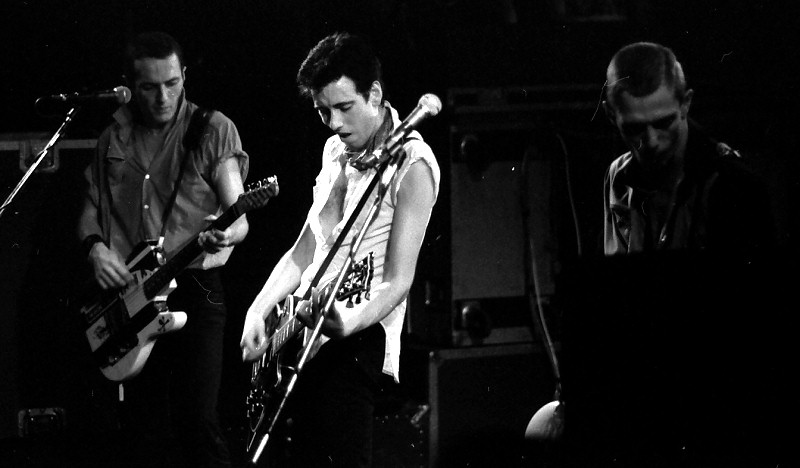
The Clash – Opher’s World pays tribute to genius.

If the Sex Pistols were the battering ram used to knock the doors down then the Clash were the style and substance. Where the Sex Pistols were brash the Clash were cool. Where the Sex Pistols were blatant the Clash were more subtle. They took the energy and vibe of Punk and used it to harness a philosophy of political and social change.

At the time they were described as the intelligentsia of Punk. I’m not sure about that. They didn’t always get it right. There was an element of lauding yobbish behaviour, bank robbery and crime as if it was all part of some planned rebellion against the establishment that would bring about social change. As far as I could see robbing banks was not a career path to encourage and it wasn’t a victimless crime. Putting that aside we do find the Clash taking a stance. Unlike some of the other Punk bands they sought to ally themselves to the Blacks who they identified with as a victimised minority. This put them right at the forefront of Rock against Racism.

This also fostered a liking for Reggae and to a lesser extent Soul which they saw as musical forms that expressed the same defiant lyrical content and rebellious attitude. It meant that they introduced reggae rhythms into their music which was unique among the new Punk bands. They even got Lee Scratch Perry to co-produce a number.

With numbers like ‘White Riot’ which incited young White kids to get out and protest the way the Blacks had done, ‘London’s Burning’, ‘Tommy Gun’, ‘Career Opportunities’, ‘Police and Thieves’ and ‘Garageland’ they set out both their Punk credentials and a desire for direct action. The track ‘I’m so bored with the USA’ was a protest about the dire American crap we were being bombarded with as culture. They might be inspired by the likes of the Ramones and New York Dolls but this was a British Band living in the austerity and class war of Thatcher’s Britain. They were giving a voice to all those disenfranchised kids in British cities and didn’t give a damn about what America thought.

It was the third album – ‘London Calling’ that really sealed them as a great Rock band. It rose above being a mere Punk album with its clear and more sophisticated production, range of styles and songs and yet kept the Punk ethos. They even adopted Rockabilly as an authentic Punk expression. ‘Guns of Brixton’ reaffirmed that identification with Black culture and ‘London Calling’ with its distinctive guitar sound was mainstream Rock. The cover, which was a pastiche of Elvis’s first album with shades of the Who’s smashing guitars, was a move away from the cut and paste of Punk. The Clash had a different look, style and range. The idea of a Punk double album was strange for the new wave. That was more the realm of  the despised progressive bands. However the move away from fast snappy songs to variety and complexity was a sign of development.

There was talk as to whether the Clash could still be thought of as a genuine Punk Band anymore. Yet the attitude was there one hundred percent. It was just that they’d moved up a league and matured. The fire was still there. Also, unlike the Pistols, they had broken into America.

If ‘London Calling’ was controversial for a Punk Band then the triple album Sandanista was even more so. There was an even greater range of styles. Yet once again even the title of the album affirmed the revolutionary nature of the band. Combat Rock with its two singles that proved very commercially viable.

The internal strains began to manifest between Strummer and Jones. Jones got kicked out and after a last effort the band broke up.

What a pity that such a great band should succumb to that ignominous end. They were not merely a top Punk band they were one of the top bands in the world.

Patti Smith – Opher’s World pays tribute to a genius.

Patti_Smith_performing_at_TIM_Festival,_Marina_da_Gloria,_Rio_De_Janeiro_(4)

Patti was really a child of the sixties. She loved Jimi Hendrix, the Who, Stones, Beatles and Them but she delivered her stuff with such passion and energy that she readily fitted into the New York Punk Scene. Her poetry was so hot it scorched your neurons. I’d play her ‘Piss Factory’ regularly as I made my way into work. It filled me with idealised energy.

Patti was a fiery poet and performance artist living with the controversial photographer Robert Mablethorpe in the Chelsea Hotel in the early seventies. She set up with th guitarist Lenny Kaye to put her poetry to music and form a band. They did covers like Them’s ‘Gloria’ and the Who’s ‘My Generation’ as well as her own stuff and gained quite a reputation for her incandescent intros about Patty Hearst, the rich girl who got involved with a terrorist group, and Jesus.

The single ‘Hey Joe’ complete with the Patty Hearst snarling intro and B-side ‘Piss Factory’ set the tone. She was a defiant lady who was going to do things on her terms and was not to be messed with. The album ‘Horses’ with its classic version of ‘Gloria’ continued the same vane.

With her androgynous look and tie hanging half-mast she had a completely new image. Everything about her shouted Art and Style.

It wasn’t until the album ‘Easter’ with the single ‘Because the Night’ which she co-wrote with Springsteen, that she broke through into commercial success. There was little sign of the industry having mellowed her. The album was just as full of expletives and energy. It was more that the time of Punk had caught up with Patti.

The albums followed as did her marriage to Fred Smith from MC5 (That great protopunk band) and the stance remained unaltered. Patti was the leading-lady of Punk.


PJ Harvey – Opher’s world pays tribute to a genius.

PJHarvey

‘Sheela Na Gig’ is probably the perfect Rock song. It starts slowly, builds in intensity and slams into a perfect crescendo. The subject matter is controversial and the delivery has emotion, power and superb delivery.

I first heard Polly when I got the ‘Rid of me’ album. It was the best album of the d

ecade and restored my faith in the continuing force of Rock Music. In this age where music is sanitised to appeal to the lowest common denominator and overproduced into bland Pop mush it was so refreshing to hear someone with spirit doing something raw, real and powerful.

Of course I rushed out to buy ‘Dry’ which was equally as good and then the brilliant 4-track demos. It all served to confirm that we had a major talent unleashed and she was going to shake England and the world.

Polly heralded from Dorset and is not only a ballsy singer but also a great guitarist and multi-instrumentalist. Her songs, ably supported by John Parish, are full of Punk fervour, emotional intensity and intelligence. There are times when the emotion becomes so great it’s almost on the point of insanity. The hatred at the break-up of a relationship is so violent that it has all the hallmarks of a bunny-boiling incident.

The sexuality shrieks but this is no frilly bimbo. It is a feminist unleashed lust, a mature woman in command of her desires. There is naked erotic animalistic intensity.

Her relationship and collaboration with Nick Cave was epic.

For me the rest of her albums only occasionally rise to the same level but Polly is none the less still one of the best things on the scene. She never does anything bland. I’d go and see her perform anywhere.

The Velvet Underground – Opher’s World pays tribute to genius.

vu

Back in the sixties New York was a much harsher place than over on the nice sunny West Coast. That urban brutality was reflected in the way people lived. New York was a violent place. There were lots of muggings and rapes. People got killed.

We visited in 1971 and picked up the vibe. At night when you walked around the streets were suddenly empty and your footsteps echoed off the sky-scrapers all around, steam ballooned out of the grills in the streets and taxi’s scooted through. A friend we met told us how she had been raped three times while living in New York. On one occasion a guy smashed her door down with an axe. None of the surrounding apartments rang the police.

It was also a vibrant place to be. The clubs were heaving and people were friendly. We walked round Greenwich Village and thought about what had come out of the place. There was a lot of street hustling, prostitution and hard drugs. There were also the transvestites and gay scene. Anything went.

This was the environment that the Velvet Underground slithered their way into. Lou Reed came in from the Garage Punk Band side of things. He brought his musical skills and guitar and knowledge of the streets. Nico came in from fashion. She was a model in Andy Warhol’s film Chelsea Girls. She’d never sung. Her voice with its German brogue was very different. John Cale was a Welsh classically trained experimental musician who teamed up with Lou. Mo Tucker was the female drummer. It was extremely unusual to have female drummers back then.

On the face of it they were a motley crew but together they produced music like no other that had ever been imagined. They changed the world of music and gave rise to a thousand bands.  They used light shows but they weren’t psychedelic. They used weird instruments, sounds, drones and electronic stuff but it gelled.  They were adopted by Andy Warhol who used them as the house-band in his multimedia shows – the Exploding Plastic Inevitable. They provide the music while films played and light shows flashed.

There first album was one of those 1967 wonders though completely different to the rest of the Hippie stuff. This was hard-nosed New York under-life with all the seedy elements left in. There were the themes of heroin, scoring heroin, sado-masochism, and the Vietnam War.

They parted from Andy Warhol and Nico left town, seemingly after an altercation with the mafia, and the second album followed much the same set of themes. The experimental aspects were to the fore on the extended Sister Ray and the themes of sexual deviation, hard drugs and amphetamine were all there.

After personnel changes and a couple more albums they split up. They were never a huge commercial success but they had created something really different that was to feed straight into the New York Punk scene. They became heroes of the Punk Movement.

In hindsight they proved to be one of the most influential bands that came out of the sixties.

The Tom Robinson Band – Opher’s World pays tribute to genius.

Tom Robinson

Punk emerged from Thatcher’s Britain like rabies from a dog-bite with all the bile and fury of the pent-up fury at being regarded as superfluous. It was the voice of the dispossessed who had no future and nothing to lose.

With many bands it was all visceral and mad anarchic angst, not really saying things as much as shouting. With other bands that hormone driven frustration was vocalised in acidic terms that hit out like a scatter-gun at any target going.

The Tom Robinson Band were different. They spoke, or rather shouted, on behalf of the gay community who were just one of the many minority groups to feel the toxic breath of Thatcher’s intolerant venom. The gays, like the miners, unions and anyone with the slightest liberal bent, were being targeted. The law with the infamous clause 28, which made it illegal to promote homosexuality, had activated the police to be able to come down on them.

Punk embodied all of these disenfranchised groups. The working classes had no jobs as the economic crisis was politically deployed to break the unions, bring in new technology and obtain cheap labour. There was mass unemployment and no sympathy or assistance given. The Blacks were targeted with SUS. Someone had to speak out against the abuse and speak up for the downtrodden.

The Tom Robinson Band wasn’t afraid to do just that. After scoring with the great but rather innocuous ‘2-4-6-8 Motorway’ the band went on to produce a couple of great albums seething with political fury. I can just imagine the apoplexy at the Beeb whjen they released the wonderfully anthemic ‘Sing if you’re glad to be gay’.

I saw them live in Hull and they had the whole place going. All those rough, tough hetero Punks singing their hearts out.

There was only one target and it was Thatcher’s uncaring Britain.

Tom Robinson hit the bulls-eye!

Which side are you on?


Stiff Little Fingers – Opher’s World pays tribute to genius.

IMG_9592

Stiff Little Fingers are my favourite Punk band. They came roaring out of Ireland full of ire, angst and fury. They were railing at the tragic life they were being forced to live in the shadow of the ‘troubles’ with real emotions based on real experience. Life was hard in Thatcher’s Britain for young disaffected youth but it was real murder in Belfast! They were fed-up with the guns, bombs, sectarian hatred, barricades, barbed wire, and being threatened by soldiers, police and paramilitary thugs. Punk proved the ideal vehicle. It all came pouring out on that first album ‘Inflamable Material’. It wasn’t inflammable it was incendiary.

No wonder John Peel loved it. He had a real ear for genuine talent. He immediately saw the genuine emotion that soaked through every sentiment. These weren’t a bunch of kids making stuff up – they were venting their hearts, spleen and lungs.

If the Sex Pistols were brash Stiff Little Fingers were brazen. If the Pistols were hot Fingers were nuclear. Not only that but they had the lyrical ability to put it all down in a form that made it interesting and accessible. Jake Burns had the word play at his finger tips to illustrate the world they lived in. He even managed to inject some humour in between the fury. This was Punk with real teeth. This wasn’t to do with Thatcher’s selective austerity and no jobs for the lower classes, class warfare; this was war with real bullets, bombs, threats and deaths.

Fingers even took the Bob Marley classic ‘Johnny Was’ and made it there own. Where the song was about a senseless gang killing in Trenchtown they transferred it to Belfast. The raw guitar exchange of riffs with their strident ring gave it a sinister edge. It was an anthem to senseless murder and violence. The riffs snarled and spat. The vocals soared with despair.

Fingers were what Punk was all about – protest, despair and fury. It was the voice of disaffected youth who saw that they had no future.

This was my type of music, full of rightful political/social fury at the injustice created by politicians, religious leaders and the businessmen who orchestrated the unequal world order. It was a scream of protest. They made the Irish situation stark for all to hear but also illustrated a problem the world over. The ones at the bottom were being shat on by the tiny minority that ran it all.

Punk didn’t get much better than this!

IMG_9522

Sex Pistols – Opher’s World pays tribute to genius.

Sex Pistols

The whole Punk idea had really started up in New York in the early 1970s as a rebellion against the Long Hair and drawn out solos of the Hippie scene. The name Punk had been around for a long time as an epithet for a young gormless kid. A new generation of kids was looking for something different. They craved rebellious identity. They wanted their own distinct culture that was separate from the Hippie thing. They went for short spiky hair and loud, fast high energy tracks.

Bands like the Ramones, Patti Smith, New York Dolls, Wayne County and Richard Hell were creating a new dynamic music centred on a vibrant set of venues such as CBGBs, and Max’s Kansas City.

Malcolm McClaren spent time in New York managing the New York Dolls and learnt a lot (not that that did the Dolls very much good!). He was impressed with the club scene, the kid’s attitudes, fashion and the potential of it. When he went back to London he had this idea that he’d like to recreate it. He was running this alternative boutique called SEX selling Vivienne Westwood’s outrageous designs which incorporated BDSM, spiked collars, razor-blades and lavatory chains; the more outrageous the better. He wanted to promote the shop and fashion and looked to produce a band who would model it and spread the message.

The Sex Pistols were as manufactured as the Monkees had been. Malcolm McClaren selected Johnny Rotten because of his looks and green teeth. He stole the image of spiked hair, torn clothes held together with safety pins straight off of Richard Hell.

He set about promoting them and creating a generation gap. This was rebellion but not as we had known it. The music was secondary. The attitude and look was fundamental. He based the sound on the New York Dolls, combined it with a nihilistic attitude, aggressive manner and the slogan ‘Never trust a hippie’.

It worked. The kids loved it. The band rapidly got a reputation for being loud, violent and different. Punk was born. Malcolm got them signed, fired and signed again. He courted controversy. It wasn’t about the music as much as the image.

The first album and singles started an overnight sensation. All over the country the young kids dumped their sixties look and albums and became Punks. Flares were instantly uncool, long hair cut and spiked and bondage clothes were in. The safety pin and gel industry had a boom. Everything was ‘Boring’. Bands were spat at in appreciation (not that they appreciated it) and pogoing was all the rage making it impossible to stand and watch. It was a phenomenon.

The Sex Pistols got loads of cash signing to different labels. Their appearance with Grundy became legendary and blown up into mythical proportions. A series of other punk bands sprang up out of nowhere with the Clash, Stranglers, Damned, Buzzcocks and Stiff Little Fingers leading the charge.

The Pistols album with its lurid cover – ‘Never Mind the Bollocks…’ got banned from displays. Their singles got banned on the Beeb. They got arrested for playing ‘God Save the Queen’ on a boat going up the Thames outside the House of Parliament (it was the jubilee year!). Nobody knew how to handle it at all. Malcolm revelled in it. It was all good stuff and grist to the mill!

Punk was enormous. The Sex Pistols were on everyone’s tongues. They provoked fury and horror from parents and the establishment, bemusement and disdain from the sixties musicians and generation, while the kids adored them. It was only the likes of John Peel, with his ear for the unusual and love of anything different, who embraced it. It took everyone else a long while.

The music was almost incidental and overlooked but ironically that first album was superb. Almost every song was quality. The production was shockingly clear. The Sex Pistols had achieved something extraordinary. It wasn’t all froth and advertising. Johnny Rotten had skill as a songwriter, singer and front man. Messers Lydon, Cook, Matlock and Jones had come up with something brilliant. Despite the hype they had ability. How extraordinary!

The Sex Pistols could not maintain the pace or standard. Glen was replaced with Syd. They were catapulted into stratospheric heights without a spacesuit. McClaren got them on a big US tour and they imploded. Johnny left. The rest put the finishing touches to the film that told the story – The Great Rock ‘n’ Roll Swindle, and the album. That album was mediocre to say the least. They scooped up the dregs and milked it. They even did a publicity stunt with Ronnie Biggs and split up.

Johnny Lydon went on to form Public Image Limited.

Punk had been the ideal riposte to Thatcherism with its class war and no hope for a generation. The kids response had been to shout ‘UP YOURS!!’ with typical British bluntness.

The Sex Pistols had epitomised the attitude of Punk. They’d set the tone and that first album and those singles were the best.

Ironically Punk never really took off in the States. It remained a minority sub-genre. It had transformed Britain but when I went to live in Los Angeles in 1979/80 the kids were still in flares with long hair and Led Zeppelin were all the rage. It was as if the Pistols had never happened.