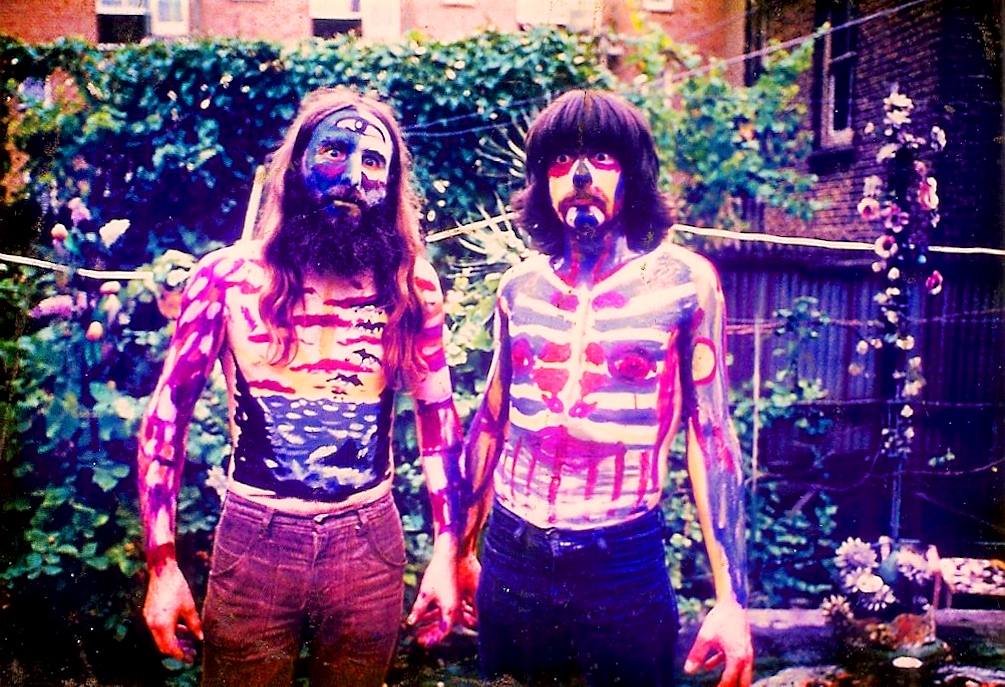
Photo Gallery – Back in the Sixties!

Photo Gallery – Back in the Sixties!

AppleMark

I didn’t use a real photo of me because I didn’t want to scare you.

These are photos from back in the sixties when I was young, wild and free and everything was right with the world. I thought I could do anything I wanted and change the world. Oh to be full of the joys of youth!

My wife doesn’t want to appear on my blog so don’t tell her that I’ve put her photos up here! She is so lovely I couldn’t resist! I’m the ugly one!

https://ophersworld.com/photo-gallery-back-in-the-60s/

Poetry – The Sixties – a poem about how is was dealt with.

Poetry – The Sixties – a poem about how is was dealt with.


The Sixties

Being brought up in the sixties was a mixed blessing. It was a time of great social change, camaraderie, ideals, optimism and adventure. It was a time when a large section of youth questioned the order and wisdom of their elders.

We thought things could be done differently without the paranoia and warmongering, the greed and selfishness. We really believed that we could create a fairer system with equality, fun, creativity and love. Friendship took on a new dimension. There was no room for racism, poverty or war. When you met people from other cultures you could relate with respect and not hate them because they were different.

People wore bright clothes that reflected the happiness and positive feelings of the time.

It was a time of great optimism and idealism, a time of global perspective, travel and discovery.

Rules – there were no rules.

We made up our own rules.

We were freaks. We did it differently. It was a universal peoplehood.

Of course the establishment were not to enamored. They saw us as a threat and our culture as opposed to everything they stood for.

They were very clever. They absorbed, bribed, subverted and took over. They ridiculed the culture, caricaturized it, satirized it, and made it into a fashion. They sold it and profited from it.

Having experienced a feeling of such positiveness it is hard to return to the rat-race of profit, greed and cruelty and resume the paranoia as if it had never been interrupted.

The sixties was like the football match on Christmas day that first Christmas in the trenches – a brief friendly interchange where you found the enemy was just the same as you. Normal warfare was quickly resumed.

The Sixties


Naïve, happy and positive,

With all the world ahead.

Changing the universe

And laughing on the way.

I thought we’d altered for ever

But found

It will be the same

As today.


Busy blowing cobwebs down

The dusty hall,

As we shunted

The old order out.

But we were merely

Creating an interlude

That wasn’t worth

A shout.


Outmanoeuvered

And sold down the stream.

They changed it into fashion

And sold us

Another dream.


Opher 8.11.2015

Anecdote – Bede and the spontaneous party

Anecdote – Bede and the spontaneous party

Bede and the Party

Bede is a good friend; I ended up sharing a flat with him in 1970.

The first time I remember meeting him was at his twenty first birthday party. He was completely naked running about all over the place. It was a strange party.

I had a car. It was an old Ford Popular sit-up and beg car that I’d painted. I’d used all the bright gloss paint I could lay my hands on. The grill was orange, body pink, lamps yellow, wheels orange with a blue stripe down the middle and various green trim. You could see it coming. It was my magic bus. It proved very popular with the police. They loved pulling me over and trying to find a problem with it. I had to regularly take my documents in to the police station. I was on every page in the book.

A stone had shattered the windscreen and, as I didn’t have the money to replace it, I solved the problem by knocking the glass out. It made for a breezy ride but was good in summer.

I’d been out to a gig with Bede and after we were heading home in my rainbow car when Bede saw that the pubs were emptying. He told me to pull over.

Bede climbed out through the broken windscreen and stood on the roof. He announced that there was a party about to happen round at his place. It seemed to go down well.

By the time we got there people had started arriving. The only trouble was that Bede was not really set up for a party. There was no sound system, no drink, no food, but we had lots of people.

Soon the flat was heaving. They were very amenable. Bede and I randomly read extracts of books to great cheers. Before long spliffs started circulating, booze magically appeared, a sound system materialised and some good music started up.

It went on all night and developed into one of the best. The only downside was that someone stole a couple of Bede’s shirts!

Crazy times.

The Sixties – My favourite films from back then.

The Sixties – My favourite films from back then.

51GKc+4W1pL__BO2,204,203,200_PIsitb-sticker-v3-big,TopRight,0,-55_SX324_SY324_PIkin4,BottomRight,1,22_AA346_SH20_OU02_

The sixties was one of those immensely creative and different periods. It felt to me like a butterfly emerging from a cocoon. We had the war and then the austere fifties where Britain was still full of rationing and catching it’s breath. Then we had the colour and liberalisation of the sixties – full of vim and vigour, where anything was possible.

The music scene was the most obvious expression of those times but then there were the fashions, comedy/satire, politics, newspapers and film.

My favourite films included:

2001 – A Space Odyssey. Arthur C Clarke/Stanley Kubrick masterpiece. I do not think it has been bettered as a Sci-fi film.

A Lion in Winter – incredible Historical drama.

Easy Rider – Peter Fonda and Dennis Hopper masterpiece of motorbikes, drug deals and the schism created by the counter-culture.

Blow-up – a romp with a photographer, dolly birds and a murder.

Romeo & Juliette – Olivia Hussey – She could break your heart.

Solaris – The Russian 2001.

Far from the madding crowd – Thomas Hardy meets Julie Christie

A Clockwork Orange – Stanley Kubrick masterpiece of an Anthony Burgess book – Banned for a long time because of the copy-cat gangs. A futuristic drama with philosophical shades. A Malcolm McDowell special.

Women in Love – D H Lawrence’s genius coupled with Alan Bates, Glenda Jackson, Jennie Linden and Oliver Reed.

Alice’s Restaurant – featuring a very young Arlo Guthrie and based on his epic song.

The Knack – came out early and had a big effect on me. I painted everything in my bedroom white!

If – a story of public school and youth rebellion with Malcolm McDowell again.

Get Carter – The epitome of Michael Caine Northern Gangster movie.

There were a lot more but that will do for now. They seemed to catch a bit of the rich tapestry of the sixties.

Sixties – My favourite TV from the late sixties.

Sixties – My favourite TV from the late sixties.

51GKc+4W1pL__BO2,204,203,200_PIsitb-sticker-v3-big,TopRight,0,-55_SX324_SY324_PIkin4,BottomRight,1,22_AA346_SH20_OU02_

I wrote up my memories of the sixties in this book. It really catalogues what was going on from my perspective.

I don’t have a great deal of time for TV and I’ve never been avid about too much. When I left home to go to college in 1968 we did not have a TV at all and I did not miss it one bit.

The four programmes I had time for were:

The Prisoner – a series starring Patrick McGoohan. It was a surreal programme set in the most amazing background of Portmerion with its futuristic architecture. It was loosely concerned with a secret agent who tried to resign and a village that he was held prisoner in, guarded by a huge bubble called Rover. He could trust no one and could not escape as they tried to reintegrate him to society. In fact it was an allegory on the pervasive techniques of the establishment. Very rebellious. Roy Harper used it as inspiration for his fabulous McGoohan’s Blues.

Marty Feldman – who had a hour directly after the Prisoner of the zaniest comedy. He was very funny and socially motivated. Unfortunately, after appearing in a couple of Films (The Young Frankenstein being one) he died.

Monty Python’s Flying Circus – always coming from Left-field in the tradition of the Goons.

Not only…. But also Peter Cook and Dudley Moore – another zany and wild comedy act that poked fun at everything.

That’s all I can think of that I got into. Probably some of you can jog my memory on a few more.

Rock Music Genres – The British Blues Beat Groups of the early 60s – The Rolling Stones, Yardbirds, Them, Pretty Things, Downliners Sect and Animals.

Rock Music Genres – The British Blues Beat Groups of the early 60s – The Rolling Stones, Yardbirds, Them, Pretty Things, Downliners Sect and Animals.

DownlinersSect895 DownlinersSect1

The British Beat Group Blues boom – 1964

Hard on the heels of Merseybeat came the first British Blues boom in the form of the sixties beat groups. They were led by the Rolling Stones but closely followed by the Animals, Pretty Things, Yardbirds, Downliners Sect, Manfred Mann, Bo St Runners, Kinks and Them.

The real pioneers of this Blues boom were Alexis Korner’s Blues Incorporated, Graham Bond and Zoot Money. But, while being seminal, they did not receive the commercial success of their compatriots.

The blues set, of which I was one, were a little snooty when it came to the blues. We saw it as superior to the Pop and Rock of the day. It seemed raw, earthy and authentic, not produced as a product by the record companies. This was genuine music from the heart, or at least the genitals. It spoke of real life and not soppy love, and teenage crap. You could wander about looking incredible serious and intellectual clutching your Sleepy John Estes and Elmore James albums. It was all very cliquey. And this was precisely how many of these bands came together. They were passionate aficionados. To us blues wasn’t just a music form; it was a crusade. We loved it and we loved those old black guys from the depths of Mississippi, Texas and Louisiana. It was an exclusive club.

In the Art Colleges all over the country various passionate blues musicians got together to swap their precious collections of coveted albums, learn licks, exchange tales and learn how to imitate their idols. They didn’t do it quite the same. They speeded it up a bit, added a bit of a rave up, but in general were remarkably true to the music of their heroes. They might have wanted to make the big time but it was more important to be true to the music, do it justice and win the respect of your fellow musicians. In the process it created a great club scene and a lot of followers. The blues was cool.

From the Deep South of the Thames Delta we had the Rolling Stones and Yardbirds fighting it out for supremacy in Richmond and the Kinks and Pretty Things battling with the Downliners Sect. From the swamps and levees of Newcastle we had the Animals and from the plantations of Ireland we had Them. Almost overnight the blues was the biggest thing going and the kids were all dancing to the music of black southern America.

The catalogues of Howlin’ Wolf, Muddy Waters, Jimmy Reed, Robert Johnson, Bo Diddley, Chuck Berry and John Lee Hooker were plundered.

The Stones nearly hit with their first single – a cover of Chuck Berry’s ‘Come On’ and then had theit first top ten hit with a song given to them by the Beatles. After that it was all systems go. They actually got to number one with an extremely authentic version of Howlin’ Wolf’s ‘Little Red Rooster’. Their first two albums were stuffed with blues covers. Likewise the Kinks first album was full of Swamp Blues. Them hit the charts with ‘Baby Please Don’t Go’. There were covers of ‘Dimples’, ‘Got My Mojo Working’, ‘I’m a Lover not a Fighter’, ‘Got Love if You Want It’, ‘Good Morning Little Schoolgirl’, ‘Hoochie Coochie Man’, ‘I Just Want to Make Love to You’, ‘I Ain’t Got You’, ‘Cadillac’, ‘Honest I Do’, ‘I’m a Man’, ‘I’m Mad Again’, ‘I Wish You Would’, ‘Smokestack Lightnin’’, Mona (I Need You Baby)’, ‘Too Much Monkey Business’, ‘Around and Round’, ‘Bo Diddley’, ‘You Can’t Judge a Book’, ‘You Can’t Catch Me’, ‘Boom Boom’, and a dozen more. The blues was selling to white kids. They were in the playground discussing blues harp, slide guitar and square guitars. The exclusive club had opened right up.

This in turn paved the way for the blues guys to come back over from America. Middle-aged blues guys like Muddy Waters, Howlin’ Wolf, Sonny Boy Williamson and John Lee Hooker received rapturous receptions from young white kids while mini-skirted white girls danced to their rhythm. They must have been amaqzed. It was a million miles away from the sweaty Chicago clubs.

The Press had a field day. They pitted the long-haired, scruffy blues bands against the smart suited Mersey bands. There were the lovable mop-tops and the obscene and dangerous Stones who you wouldn’t want your daughter going within a hundred miles of. It was great fun and of course the Stones manager – Andrew Loog Oldham – lapped it up and fed it for all it was worth.

What it did to the music was to bring a harder edge to the sound. It was not so Poppy and over-produced. There was a rough, raw edge to it. This was not commercial pop; this was unrefined blues – and it rocked! The excitement and energy was right there in your face!

The first band I ever saw live were the British Birds with Ron Wood on guitar. The second band I caught was Them when ‘Baby Please Don’t Go’ was riding high in the charts. I was in my element.

Of course it couldn’t last. The blues bands were quickly joined by the Mod bands and soon everyone was writing their own material. It all became more ‘original’ sounding and the blues became only one component.

You can see it with the Stones – the first two albums were heavily Blues and then the music changed. Likewise with the Downliners Sect – one superb blues album and then into country. The Kinks – one Swamp Blues album and then their own distinctive sound. The blues phase moved on and burnt itself out. After 1964 the British Blues Beat Bands changed their sound.

The irony was that, on the back of the Beatles and Merseybeat, the British Beat groups exported blues back to America. The Rolling Stones, Animals and Yardbirds got the American white kids dancing to black American blues. The real thing might have been playing on their doorsteps and they had never heard it. They went for the sound of the British Beat groups with a vengeance. The blues invaded America.

Rock Music Genres – British Mod Bands of the Sixties – Who, Smallfaces etc.

Rock Music Genres – British Mod Bands of the Sixties – Who, Smallfaces etc.

Frame_8.tif

The Mod Beat Groups – 1964

Along with the advent of the British Blues groups came the Mod bands. The were led by the Who and Small Faces but there was soon a lot of cross-over. Bands like the Stones, Yardbirds and Kinks were rapidly absorbed into the Mod scene. Then there were bands like The Action, Creation, Birds and the Smoke.

The Mod scene was a phenomenon. At one end of my town was the old Rocker café. They had their big motorbikes, leather jackets and greased back hair. They listened to the old Rock ‘n’ Roll with Eddie Cochran, Little Richard and Jerry Lee Lewis. At the other end was the Mod café. They were into Ska, Bluebeat and R&B. The Mods had their scooters. They had to be gleaming chrome with loads of fur trim and racks of lights. The Mods had layered hair and Italian suits with chisel-toe boots. The girls wore mini-skirts with plastic macs and had their hair back-combed and bobbed. The need was to keep up with the changing fashion. The in thing was to put on your fur-trimmed Parka over your suit and ride around on your lambretta with your girl draped over the back.

The Mods were into purple hearts and modern art design with the Union Jack being a favourite motif. All the Mods in my place seemed to be small, cocky and chirpy. The Rockers were bigger and meaner. There were lots of fights and aggro.

Then there was the language. Every tribe has to have its coded words so that everyone else was excluded from the ‘In-Crowd’. You could just be a number or if you were ranked highly enough you could be a Face. The Who started out as the High-Numbers and the Smallfaces were little guys with high status.

The Mod Bands were producing great original sounds. The Who started off with ‘I Can’t Explain’ with its heavy riff, the Kinks got in on the scene with ‘You Really Got Me’ and the Smallfaces with ‘What You Gonna Do About It’.  Their albums were filled with the sort of R&B tracks that the kids were into with James Brown covers and Martha and the Vandellas. The strange thing is that I do not remember any of them doing any reggae covers though the Ska and Bluebeat were really popular.

It didn’t take long for the whole Beat scene to merge together. I don’t know what the States made of it all. It looked as if the Mersey, Blues and Mod bands were all merged in together as the British Invasion. They probably didn’t make the same distinctions as there were in England.

Jimi – a poem

Jimi


A sorcerer

Changing a guitar into a bomb,

A machine gun,

A helicopter gunship,

A roaring machine of death

Or a vehicle of love.


Harnessing feedback

Through a tremolo arm,

With an elbow,

The back of a hand,

Teeth and soul.


Creating sounds

That had never been heard;

A tsunami of emotion

And wonder.


A magician

Towering over

The vibe

Of our alternative

Vision.


Opher – 16.8.2019


I was fortunate enough to catch a look at Woodstock. It took me back to the ideals of my youth. We were so naive – but brave, so optimistic and full of hope, so earnest and determined.

This is the new world we built.

We fought for freedoms, nature, equality and an end to racism, sexism and elitism with big dollops of love and fun.

It’s a battle that is still going on.

I watched Jimi play at Woodstock – not long before his death. He brought reality and Vietnam into the fight. War is the result of all that greed and inequality. He conjured up emotion.

We had the alternative vision and Jimi was our magician. He worked his magic in our ears and minds and opened our eyes.

Phil Ochs – Changes – A beautiful song about how everything passes.

Phil Ochs – Changes – A beautiful song about how everything passes.

phil ochs 2

Phil Ochs was a troubled genius. His songs are so passionate and thought provoking. This song is not a social/political one. It’s about how things come and go. We have to love them and give them up. Our loves, our lives are transitory. But there is beauty in that moment and we can look back at the beauty and share it.

Time brings changes and the new can be different and just as good. Our lives change. The passions die down. We grow old and die. But life goes on and those changes are all part of its richness. We leave something of us behind in the passing.

Phil certainly touched and changed a lot of people. He fought for a fairer world. It’s a fight that continues.

All life is change. Before we go we have a duty to make the world better.

I’m including this song in the celebration of my life.

Changes

Sit by my side, come as close as the air
And share in a memory of gray
And wander in my words
Dream about the pictures that I play of changes

Green leaves of summer turn red in the fall
To brown and to yellow, they fade
And then they have to die
Trapped within the circle time parade of changes

Scenes of my young years were warm in my mind
Visions of shadows that shine
‘Til one day I returned and found they were
The victims of the vines of changes

The world’s spinning madly, it drifts in the dark
It Swings through a hollow of haze
A race around the stars
Journey through the universe ablaze with changes

Moments of magic will glow in the night
All fears of the forest are gone
But when the morning breaks
They’re swept away by golden drops of dawn of changes

Passions will part to a strange melody
As fires will sometimes burn cold
Like petals in the wind
We’re puppets to the silver strings of souls of changes

Your tears will be trembling, now we’re somewhere else
One last cup of wine we will pour
And I’ll kiss you one more time
And leave you on the rolling river shore of changes

So sit by my side, come as close as the air
And share in a memory of gray
And wander in my words
Dream about the pictures that I play of changes

jorge@earthackney.co.uk

The Sixties – What it was for me.

The Sixties – What it was for me.

IMG_634151NrV3oNgqL__BO2,204,203,200_PIsitb-sticker-v3-big,TopRight,0,-55_SX324_SY324_PIkin4,BottomRight,1,22_AA346_SH20_OU02_ 51GKc+4W1pL__BO2,204,203,200_PIsitb-sticker-v3-big,TopRight,0,-55_SX324_SY324_PIkin4,BottomRight,1,22_AA346_SH20_OU02_

The Sixties – What it was for me.

Time gives you perspective.

I was born in 1949 so the sixties was my era. It was the period of time that formed me.

The sixties for me represent freedom, questioning, optimism, assuredness, discovery, adventure and experimentation.

If you never try you’ll never succeed. If you never fail you’ve never tried. Failure is a learning experience.

This was the time I left home. I had my mind full of Kerouac, Beatles, Downliners Sect, Bob Dylan, Roy Harper, Captain Beefheart and Ginsberg. I was discovering literature and reading DH Lawrence, Steinbeck, Mailer, Jerry Rubin, Hemingway, Henry Miller, Robert Heinlein, Arthur C Clarke, Vonnegut, Hesse and Sheckley. I was travelling around. At fourteen I spent the summer hitching round France, at twenty I was hitching round the States – New York Greenwich Village over to San Francisco and LA, camping in Big Sur.

I was at college and meeting all kinds of interesting people – up rapping and hanging out. There were gigs to go to, places to stay, to see, to hear, to read – minds to be expanded.

I looked at mystical teachings, American Indian philosophy, Eastern mysticism and Buddhism. I looked at nuclear physics and Art. I discovered surreal and infinity.

It was a time of growth, wonder and huge pleasure.

I was in love. I was wild and had no obligation. There was a world to discover. There was a mind to furnish.

Back then I looked at my parents and saw them in a rut of work, suburban life and boredom. I promised myself I was going to do more with my mind, my life and my future. I might burn out but I’d go down blazing.

I saw my parents following the rules. But this was the new age. There were no rules. I did not want to be part of that society with its selfishness, greed and war-mongering. I wanted a life based on different principles: – equality, freedom, exploration, fairness, openness and love. I wanted to see those other cultures and find what they were about.

I tore up the rule book. I’d make my own. I knew what I wanted. I knew what was right. I did not aspire to wealth, status or the hypocrisy of religion. I wanted something mystical and meaningful, exciting and wonderful.

I thought the new world of love and simple living, sharing and equality was worth more.

This was the height of the Hippie era and although I did not think I was one of them I was in tune with the idealism and ethos.

Of course, life caught up with me and compromise was the order of the day. But there were values I kept sacrosanct. The idealism of the sixties was subsumed and faded along with the casualties. But it left a great rebellious legacy that has changed the world and informs me to this day.

I took all that with me in my journey through life. I still do not trust our leaders. They are just people. I see them as part of a corrupt, hypocritical system. I still do not trust religion. I see it as man-made and power seeking. I still look for that world of meaning and creativity and see life as one long exploration, a journey of fun friendship and love. I still believe in openness, fairness and freedom. I took that into my teaching. Teaching is about relationship. You open up and give of yourself and you get ten times as much back. Honesty and genuine openness. I still play my music and read avidly. I still think we can build a better world. All the ordinary people I’ve met all over the world are good, kind, caring and helpful. There’s a minority of brutal thugs, selfish bastards and exploiting megalomaniacs. Why do we keep electing them?

Life is about opening your mind to the universe and letting it in. My mind is rich and full. I’ve loved it all. What a life!

I cannot imagine a better time to have lived!