The Journey Pt. 29 – Egypt and the Valley of the Kings. Photos

Off for lunch by the Nile, crossing a bridge where tens of large Nile Cruise lay in mothballs waiting for the tourists to return. There was a cool breeze to dissipate the heat, swallows rested on the mooring ropes of boats, a colourful larger bird sitting in the palm tree watching me, the call to prayer drifted over the water, a serene moment of calm.

Then we stopped at the Luxor Temple which was built along the same lines as Karnak but had a mosque plonked in the middle of it? What is it with these religions that they have to desecrate someone else’s beliefs? We find churches built in Stone Circles, Mosques on Temples, Cathedrals in Mosques. Why can’t people just agree to disagree and respect other people’s faiths? Or lack of faith?

Next stop was the incredible Collossi Memnom statues staring out majestically from their giant thrones across the plains with the backdrop of the mountains behind them.

The Valley of the Kings was full of restraints – We were only allowed to visit three tombs plus Tut Ank Karman. But what tombs!! What splendour, what colours. I’ve seen a lot of photographs of Egyptian tombs but never have I seen such rich coloration – worthy of a king. These religious fanatics believed in the Gods and the afterlife with such devout faith that they waged wars to gain incense and precious materials in order to perform ever more lavish ceremonies. They designed tombs of the most elaborate nature with diagrams to help them make their passage to the future life. They built temples and showered the wealth of the nation, even to bankruptcy, in order to guarantee their safe passage to eternal life. Their bodies, after death, were carefully prepared and their sarcophaguses were gilded with gold. An army of artists and priests worked on the tombs. Armies of slaves built the temples. It is a shame they did not put as much energy into the secular aspects of life. Their faith was for nought. Their religions have passed into antiquity. Nobody believes in that any more.

What we have left are the spectacular tombs, most robbed by grave-robbers, with their colourful hieroglyphs. So that misplaced faith was not wasted. We weren’t allowed to take photos under pain of death so these are photos I took off the web to show you how great it was. The colours were spectacular.

Egypt a cauldron of contrasts, of past splendour, a recent indifference, violence and religion, creating a minestrone of experience.

More from Petra next – then Suez and Jerusalem.

The Journey – Pt. 28 – Egypt and the colossus of Karnack – Photos

Into the cauldron of Egypt or was it? Gun posts and guns, roadblocks and militia. It feels like a country at war.

Well in some ways it was. There was the searing heat, unlike anything we’ve experienced, and the militarisation. Every few metres there were stop checks with chicanes, road bumps, fortified positions, turrets with machine guns and stern-faced, heavily-armed soldiers. Every corner seemed to have a man sitting around clutching a Kalashnikov. A show of might? A land in torment? A country at war with itself? The heat was scorching. The sun seared your skin and drained the fluids out of every pore. But in other ways it was a cauldron of delight. Everyone we passed waved, smiled and seemed genuinely pleased to see us. Through the heat of the temples of Karnak and the tombs of the Valley of the Kings the wonders of the world were revealed. Sometimes I thought the heat of wonder inside my head superseded the temperature outside! A cauldron indeed.

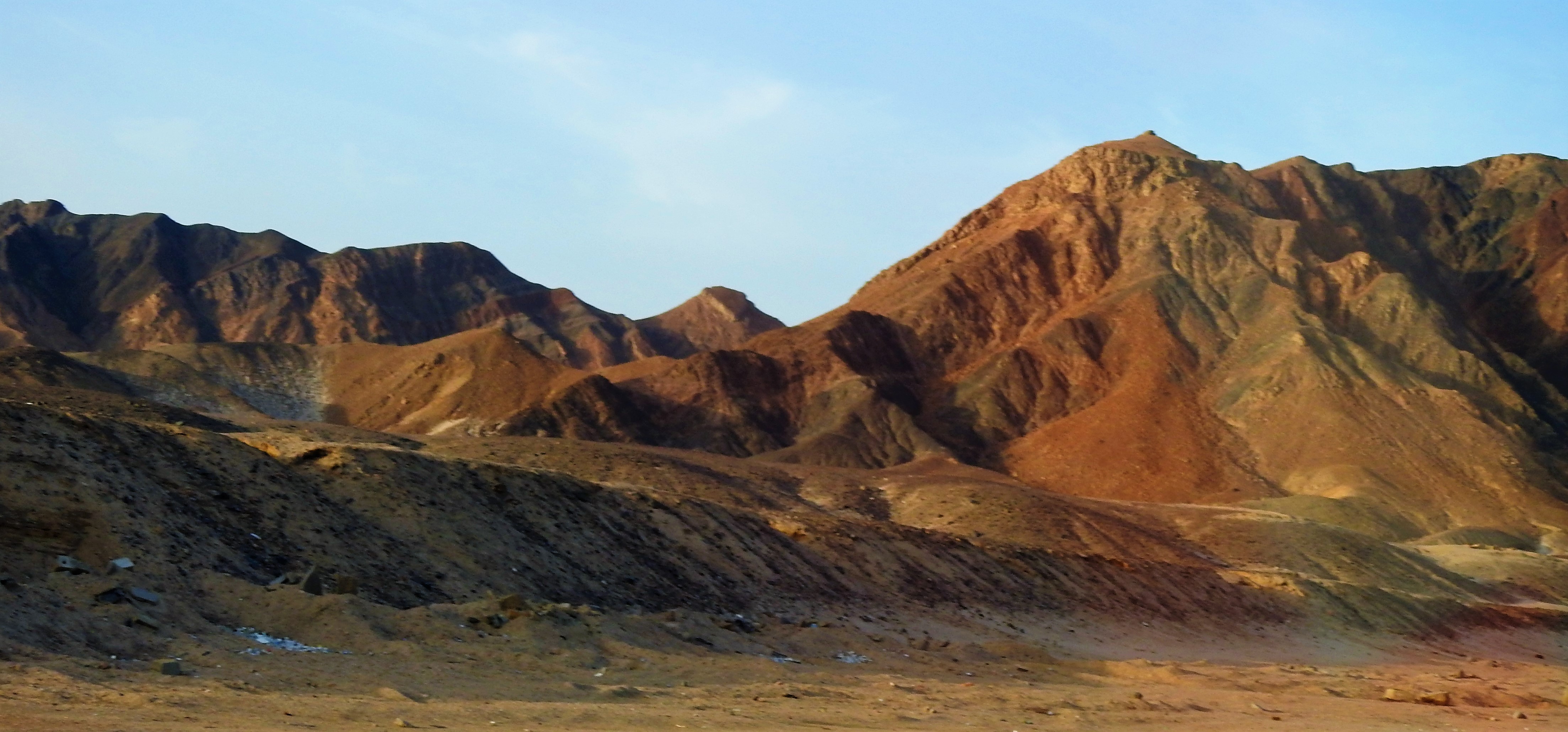
We left Safaga five hours before I even went to bed. I had breakfast before supper. Then we were on the coach for three months, at least that is what it felt like. But was it boring? Was it hell? Firstly there was the austerity of the ragged brown mountains around the port which, in the early morning light, gave them a rippling charm, as scrawny dogs picked among the piles of trash. They gave way to arid, rolling, brown, dusty hills which were strangely pleasant on the eye, though I suspect would have been a slog to walk in, especially in the heat of the day, followed by a long sandy plain that was flat and featureless and almost devoid of plant life.

All of a sudden we were in the midst of the fertile green plains of the Nile basin. Irrigation channels with petrol pumps sucking out the water to irrigate the fields, turning them to strips of green alfalfa intersected with golden corn and sugar cane. What a transformation.

There were people in the fields harvesting by hand, horses and carts, donkeys, women in long black robes and headscarves, men in long brown robes and head-scarves. It was like stepping back in time. Everywhere was heaps of rubble, unfinished houses, rubbish tipped careless down canal banks and an untidy squalor. In the evening groups of men and groups of women sat separately in the cooling air smoking hookahs, talking, playing games, praying or simply relaxing. There was something serene, pastoral and pleasant about their existence, a lifestyle that had not changed much in hundreds of years – but that was probably me being sentimental.

Karnak. Karnak. Karnak. What an amazing sight – a temple of delight. As we approached the great walls with the rows of statues of seated rams I am suffering wonder fatigue. I’ve also run out of superlatives. Looking up at the huge sculpted columns topped with their swollen discs to support the cross beams (– are stone lintels called beams?) – all incredibly carved with pictographs and symbols, surrounded by walls with the most elaborate pictographic scenes, I was overcome with astonishment. They were huge. The heat was forgotten among exploration of obelisks, remains of gigantic statues, altars, gods, rows of gigantic stone priests, pharaohs and boasts. The tantalising hints of colour that reveal a little of the immaculate splendour or lavish decoration that it would once have been. This was the temple of the Pharaohs – not for the likes of us mere mortals. Men in Egyptian robes wandered among the column and were eager to show you the best sights for a few coins.

Too soon time was up, for us, as it was for the gods so long before.  It was too short. I wanted to wander more and soak up that atmosphere, architectural wonder and arrogant display of power. The Pharaohs were in a struggle to outperform each other. No extravagance had been spared, no craftsmanship unused, no signal of glory untried. As with the temples, mosques and cathedrals we had seen before Karnack was a show of might intended to impress. Armies of artists, architects and artisans had been deployed to create a juggernaut of splendour and we were standing in its fading grandeur. What would it have been like in its day when those gods were considered real? What pageants were performed? What ceremonies? What costume?

But the reverie had to end. It was time to go. Our armed guard, who had trailed around after us with one hand on his gun throughout our visit, keeping a wary eye for our safety, ushered us back to the coach.

Outside the people were desperate to sell you trinkets, books and ornaments. The tourist trade was dead. The terrorists had put people on starvation levels. There was no work. They were desperate to sell and to assure you that it was safe – not altogether borne out by the armed guard who had his beady eye on us the whole time.