The Legendary A & M Sessions (1965) – Released 1984
Sunset Sound Recorders studio Hollywood
Record label – A & M
Released as an E.P. in 1984 by Edsel
Personnel:
David Gates: producer
Don Van Vliet: vocals, harp
Alex St Clair Snouffer: drums
Jerry Handley: bass
Doug Moon: guitar
Rich Hepner: guitar
Alex St Clair: guitar (on Moonchild)
Paul Blakely: drums (on Moonchild)
Having established themselves on the local scene, playing covers of blues numbers, the band rapidly built a following. Their sound reflected the blues of the British sixties’ invasion with inspiration from bands such as the Rolling Stones, Animals, Yardbirds and Pretty Things. Many people thought that Captain Beefheart and the Magic Band were British. The Howlin’ Wolf covers, which dominated their act and can be heard in the live recording from the Avalon Ballrooms, suited Don’s vocal delivery.
On the strength of their performances, they were signed to A & M Records for a two single deal.
In 1965 the band made their first steps into a recording studio and laid down five tracks. Four of these came out on the two singles released by A & M and one languished in the vaults undiscovered until the 1980s when it was finally released on this E.P. brought out by Edsel.
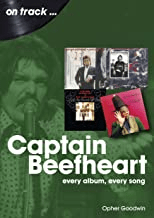
Captain Beefheart (Don Vliet) was undoubtedly the creator of the most bizarre and wonderful music. A child prodigy sculptor, he applied his artistic approach to music, creating ‘aural sculptures’. He befriended Frank Zappa in High School, collaborating on a teenage rock opera and sci-fi/fantasy film entitled Captain Beefheart vs The Grunt People. It was from this film that Don took his name. Of course, a magic character had to have a magic band. The Magic Band started out as a blues band in the mid-sixties but soon, with lysergic propulsion, surreal poetry, free-form jazz, polyrhythms and African beats, they were at the forefront of West Coast Acid Rock. A series of hugely inventive albums, including the infamous Trout Mask Replica, established them as the foremost avant-garde rock band with legendary live performances. The author was there for their first concert at Middle Earth and that night changed his life. Few Bands are as influential. The Beatles, The Fall, PJ Harvey and Tom Waits all pay homage, While The Magic Band have inspired a myriad of tribute bands and created a mythology like no other. This book sets the history of the band in context, analysing every track and interpreting the music with its poetic content. It is essential reading for diehard fans and the Beefheart-curious alike.
Captain Beefheart (Don Vliet) was undoubtedly the creator of the most bizarre and wonderful music. A child prodigy sculptor, he applied his artistic approach to music, creating ‘aural sculptures’. He befriended Frank Zappa in High School, collaborating on a teenage rock opera and sci-fi/fantasy film entitled Captain Beefheart vs The Grunt People. It was from this film that Don took his name. Of course, a magic character had to have a magic band. The Magic Band started out as a blues band in the mid-sixties but soon, with lysergic propulsion, surreal poetry, free-form jazz, polyrhythms and African beats, they were at the forefront of West Coast Acid Rock. A series of hugely inventive albums, including the infamous Trout Mask Replica, established them as the foremost avant-garde rock band with legendary live performances. The author was there for their first concert at Middle Earth and that night changed his life. Few Bands are as influential. The Beatles, The Fall, PJ Harvey and Tom Waits all pay homage, While The Magic Band have inspired a myriad of tribute bands and created a mythology like no other. This book sets the history of the band in context, analysing every track and interpreting the music with its poetic content. It is essential reading for diehard fans and the Beefheart-curious alike.
Introduction Captain Beefheart and his Magic Band are probably the weirdest band that ever existed, and possibly the best. Many people have described a gig they attended as life-changing. Few would’ve been as life-changing as my first Captain Beefheart gig. In 1967 I was 18 years old, supposedly studying for A-levels, but actually undergoing a more serious study of girls, music, Kerouac and the burgeoning underground scene. I was working long shifts through Friday nights at a Lyons bakery, where I met another crazy longhair called Mike. Mike was a little older than me and was seriously into underground music: particularly psychedelia and acid rock. He was a student of English Literature at York University and had the longest hair around: a major credential at the time. He never brushed or combed his hair (believing that it caused split ends), but he ran his fingers through to rid his hair of major tangles. Mike enthused about going to UFO and Middle Earth in London to drop acid and dance all night to bands like Pink Floyd. He was into the West Coast acid rock scene and knew about every band in the Los Angeles/San Francisco area before they’d even released an album. We spent many happy hours sitting in his room, where Mike would fascinate me with the debut albums of The Doors, Country Joe and the Fish, Love and Quicksilver Messenger Service. We were in a world of our own. Apart from John Peel, who played these jewels on his wonderful late-night radio show Perfumed Garden, no one else seemed to have heard of this treasure trove of music. John Peel championed Captain Beefheart and his Magic Band, claiming they were the best band on the planet. He not only played them on his show but ferried Don and the band around to gigs and introduced them onstage. Peel carried a lot of weight in the underground scene, which is probably why Captain Beefheart and his Magic Band were better known and had more of a following here in Britain than their native USA. I first heard Beefheart’s Safe As Milk at Mike’s on the day of its release. To say I was bowled over is an understatement. I was into both the blues and psychedelia, but this seemed to combine the two in a way that blasted your mind and body into atoms. It shook me, and I was hooked. I’d never heard anything like it. By this time, I was also going to London underground clubs Middle Earth, UFO, The Roundhouse, The Marquee and Les Cousins. For me, it was to see mainly Pink Floyd, Peter Green’s Fleetwood Mac, Jimi Hendrix and Roy Harper. When I heard that Captain Beefheart was going to play at Middle Earth, I was ecstatic. There was only one problem: I was in the midst of my A-level exams. I had been offered a provisional place at university, and needed the grades, but music was more important to me, and besides, my biology exam was a week away. Surely I could afford a night off. High on adrenalin, I drove to London on my trusty motorbike, only to discover that the gig had been postponed. Beefheart’s bassist Jerry Handley was ill, and they’d been replaced by the Aynsley Dunbar Retaliation. Now, I quite liked Aynsley Dunbar, but he was no substitute for Captain Beefheart, who was rescheduled for the following week as a double bill with John Mayall (another favourite of mine). That made it an absolute must. The gig was now going to be the night before my A-level biology exam. If I went, I wouldn’t be home until 3:00 a.m., and my exam started at 9:00 a.m.. I would have no last-minute revision, and I’d be knackered. Still, needs must. No choice! It was truly one of the best gigs I have ever been to. I can’t remember anything about John Mayall that night, but Beefheart just blew me away! Needless to say, I didn’t get the required grade, and the course of my life changed. However, I’d seen Captain Beefheart in all his glory! I wouldn’t change that even if I could.
Captain Beefheart (Don Vliet) was undoubtedly the creator of the most bizarre and wonderful music. A child prodigy sculptor, he applied his artistic approach to music, creating ‘aural sculptures’. He befriended Frank Zappa in High School, collaborating on a teenage rock opera and sci-fi/fantasy film entitled Captain Beefheart vs The Grunt People. It was from this film that Don took his name. Of course, a magic character had to have a magic band. The Magic Band started out as a blues band in the mid-sixties but soon, with lysergic propulsion, surreal poetry, free-form jazz, polyrhythms and African beats, they were at the forefront of West Coast Acid Rock. A series of hugely inventive albums, including the infamous Trout Mask Replica, established them as the foremost avant-garde rock band with legendary live performances. The author was there for their first concert at Middle Earth and that night changed his life. Few Bands are as influential. The Beatles, The Fall, PJ Harvey and Tom Waits all pay homage, While The Magic Band have inspired a myriad of tribute bands and created a mythology like no other. This book sets the history of the band in context, analysing every track and interpreting the music with its poetic content. It is essential reading for diehard fans and the Beefheart-curious alike.
Firstly, reader, I’ll tell you what this book is like: You know when you go into an art gallery or museum and have an accompanying guide book explaining a little about the art or artefacts? Well, this is very much like that. A companion piece for every track. The author has lovingly reviewed and described every song and it is also full of little facts and interesting information. If, like me, you are a Beefheart and The Magic Band aficionado (and I’m guessing that you are) then you’ll appreciate this book. We’ve all read John French’s definitive horse’s-mouth and meticulous account, Bill Harkleroad’s equally valid (but not so obsessively detailed) story and we’ve also read Mike Barnes’s fantastic and accurate outsider view. There are a couple of other tomes too but those three are the glorious triumvirate of Beefheartian history. This book isn’t trying to be that. What it does is makes you revisit the albums. Not with a different perspective – we all have our own, as does this, but with another incentive; to listen to the most original, influential, unique music in rock history. It’s a book for Beefheart lovers, nerds and obsessives. If you don’t agree with some of the author’s viewpoints on the music it really doesn’t matter. The purpose of the book is as a companion to this vast and broad decade of sheer creativity, originality and music-as-art from a genius/tyrant/eccentric and the supremely dedicated and unique musicians who helped to realise the vision, even taking a backseat to his ego for the sake of the art. I love it and so will you.
Exciting times!! After 2 years in the writing, the book is finally released in the UK tomorrow!!he Release Date in the UK is Aug 26th. (Sept 30th in the USA).